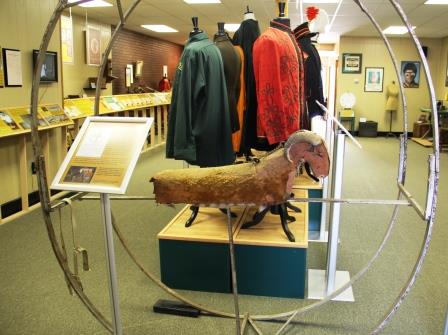
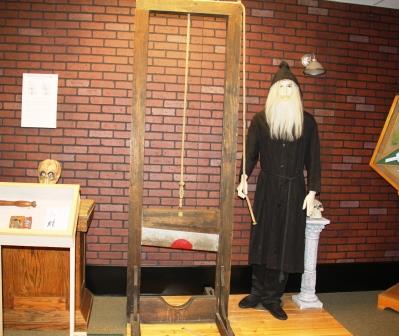
The world’s largest maker of band uniforms and choir robes didn’t start out in the garment business. The business was quite different in the late 1800s and early 1900s. Back then they made initiation devices for fraternal organizations, devices like a phone that sprayed water in the face of the user, a strength tester that paddled one’s bottom, and a trick chair that collapsed when sat in. Today you can see, and maybe become a victim of, some of these quirky and sometimes shocking devices at the DeMoulin Museum in Greenville, Illinois.
Don’t miss a Midwest Wanderer post. For a FREE subscription, enter your e-mail address in the Subscribe2 box to the left and click Subscribe.
Ed DeMoulin happened to be in the right place at the right time. A photographer in Greenville, Illinois, in the 1890s, DeMoulin liked to tinker with gadgets. William Northcott, another Greenville resident, was Head Consul of the Modern Woodmen of America, a fraternal organization. Looking for ways to increase membership in the MWA, Northcott approached DeMoulin for suggestions on making the fraternal organization more fun. DeMoulin, together with his two brothers, came up with the idea of the initiation devices, which they began producing.
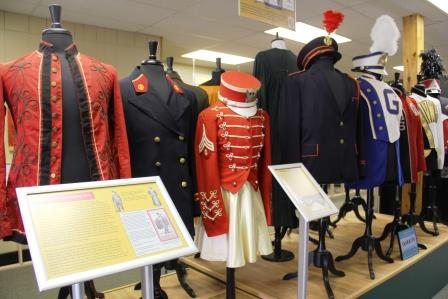
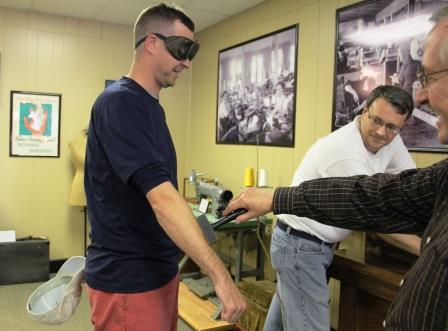
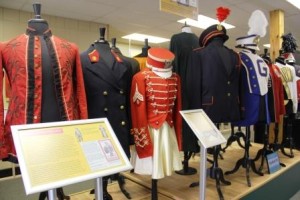 The DeMoulins’ thirty patented devices were popular with fraternal organizations throughout America and were used until around 1930. The company continued to make furniture and fraternal regalia after that and eventually evolved into band uniforms. You’ll see some of those items in the museum, too, but the fun is in the initiation devices. John Goldsmith, curator of the museum, demonstrated some of the devices for us on our visit.
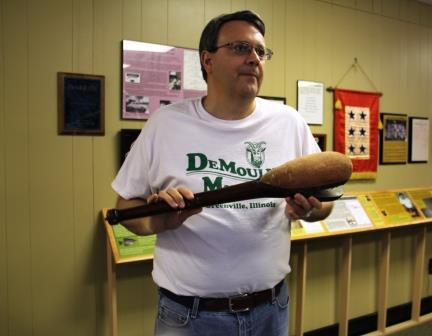
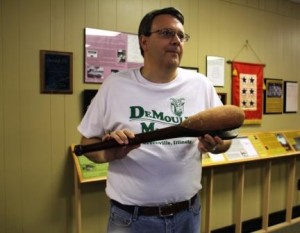
The spanker was one of the earlier inventions. The blindfolded fraternal candidate was swatted with the padded side of the spanker. When struck, a blank cartridge would go off, creating a loud noise.
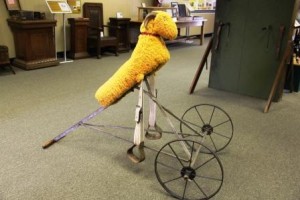
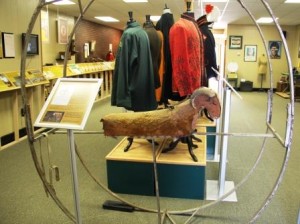
“Riding a goat” was a popular initiation, and they ranged from being pulled around on a stuffed goat until eventually falling off to being strapped onto the Ferris Wheel Goat and being rolled head over heels.
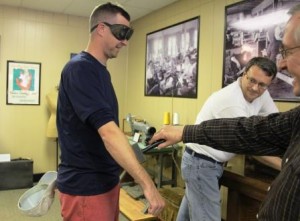
As a candidate, you might be told you needed to be branded. Blindfolded (a common thread among most initiations), your arm would be touched with the “branding iron,” giving you an electric shock.
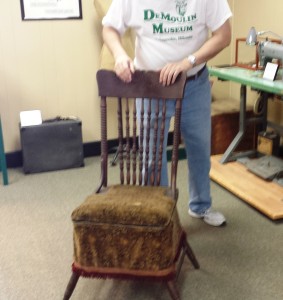
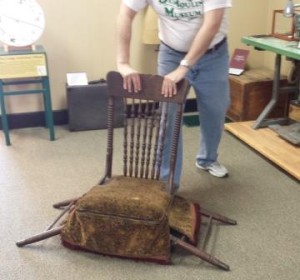
The trick chair would collapse as you sat in it, give you a shock and set off a blank cartridge.
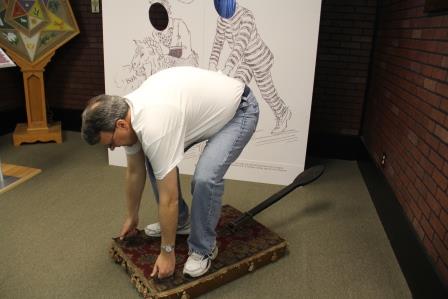
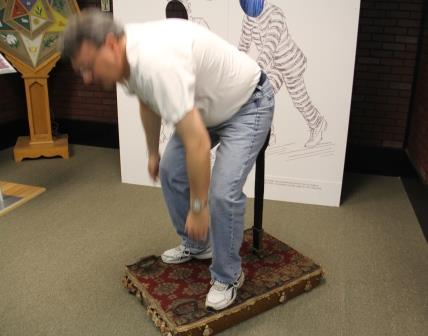
You could be asked to pull on the handles of the strength testing machine, some of which squirted water in your face, and some that whacked you in the behind with a paddle, again with the bang of a blank cartridge.
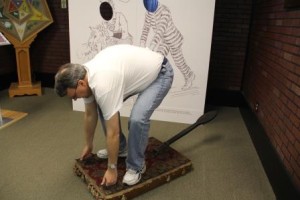
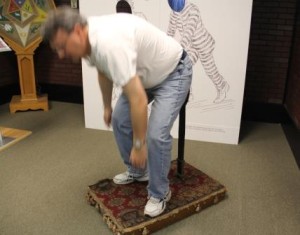
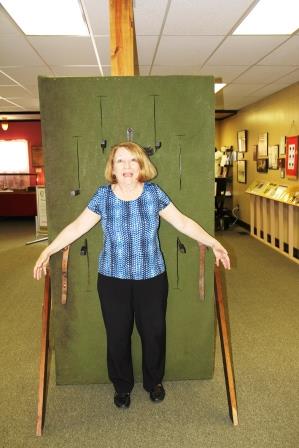
If you had the knife board initiation, you’d see someone ready to throw knives before you were blindfolded and strapped to the board. Fake knives would pop out of the board near you, making you think the knives were being thrown.
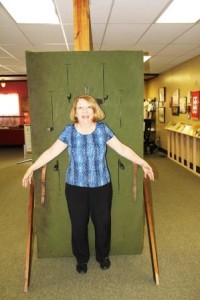
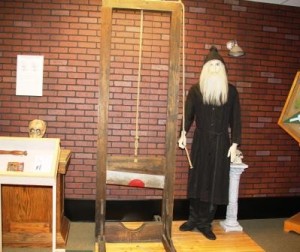
John said the guillotine, which had safety mechanisms to stop short of touching the “victim” gets different reactions from adults and kids. Kids love it and want to lay in it for photo ops, whereas adults inch away from it.
Norma Goldsmith, John’s late mother, was the inspiration for the not-for-profit museum. A long-time DeMoulin employee, Norma had her own collection of memorabilia, the start of the museum artifacts. The museum continues its search for items to add to the collection. John says it isn’t uncommon to get a call from someone across the country who happens to have a DeMoulin device or other memorabilia. In fact, David Copperfield, the illusionist is an avid collector of the initiation devices, often compares notes with John, and has demonstrated some of them on late-night talk shows.
The DeMoulin Museum has been featured on TV shows, too, which comes as no surprise. The quirky initiation devices are a fascinating piece of fraternal organization history and just plain fun.


The DeMoulin Museum, located along the historic National Road at 110 W Main in Greenville, Illinois, is open Friday through Sunday from March through October and on Saturdays November through February. Check the web site for hours. Admission is by donation. Plan to spend about an hour there.
Disclosure: My visit to the DeMoulin Museum was hosted by The Tourism Bureau Illinois South and the DeMoulin Museum, but any opinions expressed in this post are strictly mine. Accommodations were provided by Hampton Inn, Collinsville, Illinois.
Thank you for reading Midwest Wanderer. Don’t miss a post. Enter your e-mail address below and click Subscribe to be notified whenever I publish another post. Subscription is FREE. After subscribing, be sure to click the link when you get the e-mail asking you to confirm. — Connie

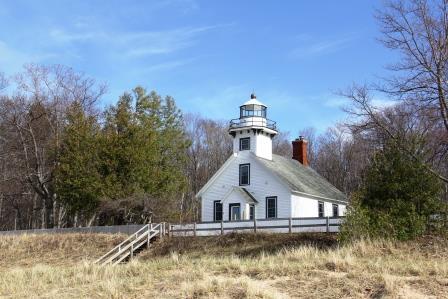 In the 1860s a ship sank after hitting a shallow reef near the tip of Mission Bay Peninsula. The event prompted Congress to finance construction of a lighthouse, which was lit in September 1870. The Mission Point Lighthouse served as a beacon for passing ships until 1933, when an automated buoy light was installed offshore. Today you can tour the building, climb up to the tower and explore the area around it. Read more