Lincoln Pops Up in the Most Unexpected Places

Lincoln Pops Up in the Most Unexpected Places

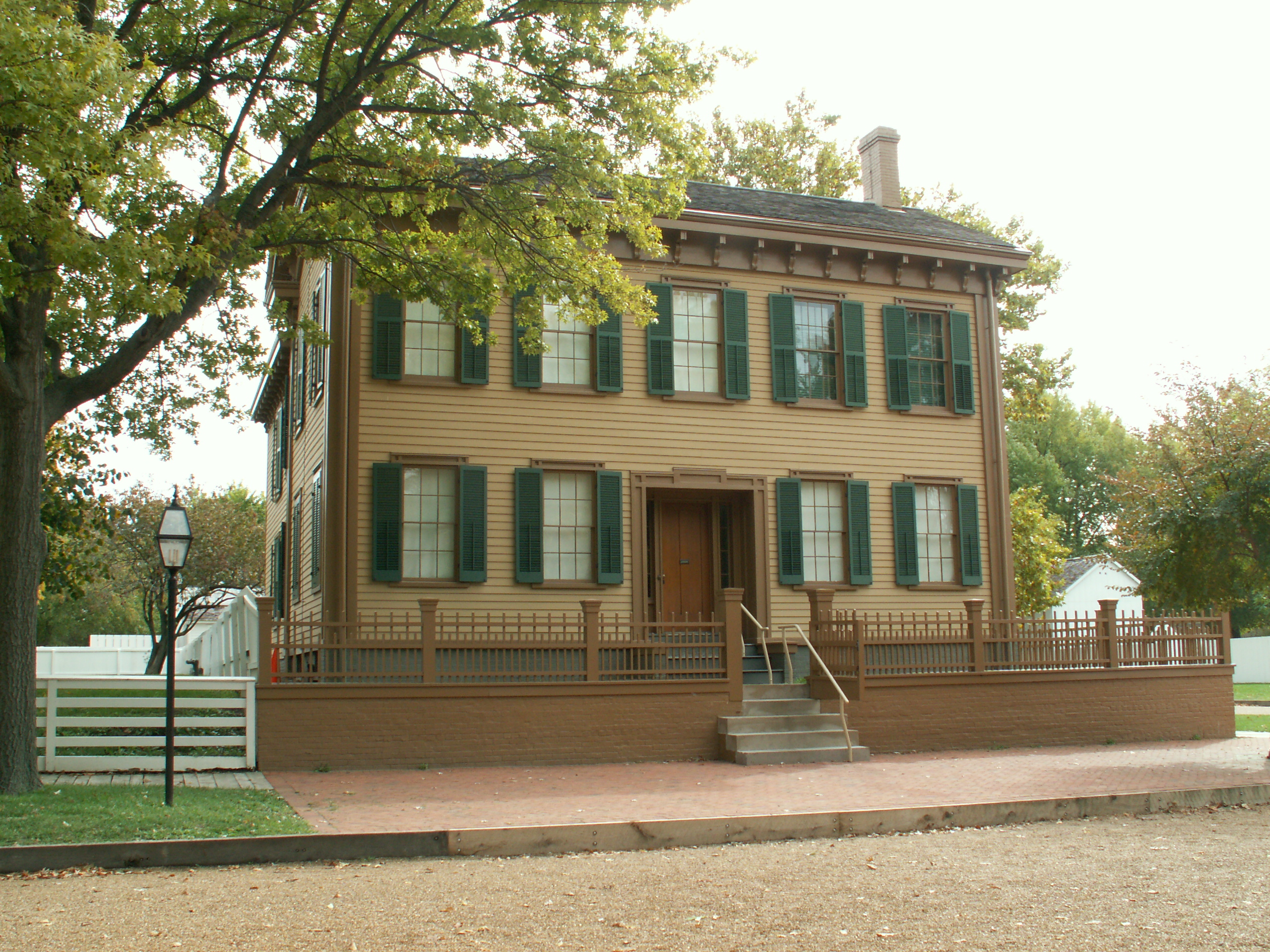
You expect to find Abraham Lincoln sites all over Illinois, and I have. Of course, they’re ubiquitous in Springfield, his home for 24 years, including the Abraham Lincoln Presidential Museum and the Lincoln Home.

Me_with_first_familyLincoln's homeAnd then there’s Vandalia, the state capital prior to Springfield and the oldest existing Illinois capitol building.

KONICA MINOLTA DIGITAL CAMERADecatur was his first Illinois home, and he lived in West Salem prior to Springfield.

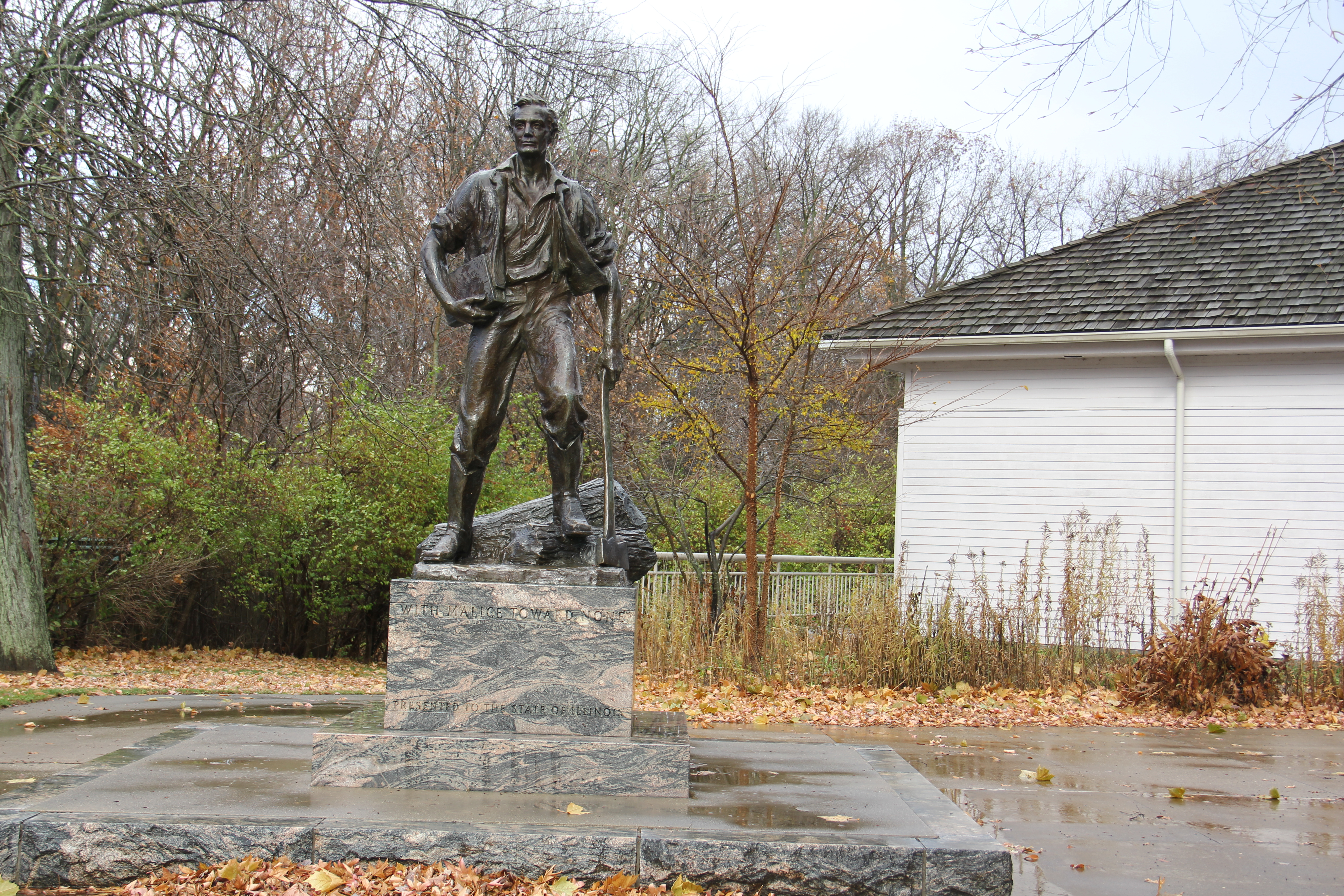
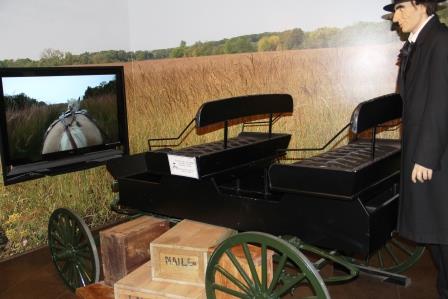
Lincoln statueAs a lawyer, Lincoln rode all over the 8th Judicial Circuit, and there are commemorative sites throughout Central Illinois where Lincoln stayed, spoke and worked. The Museum of the Grand Prairie captures Lincoln Travels through the area.

Lincoln_buggyI’ve searched out many of these places, which are often part of the Illinois Looking for Lincoln Heritage Coalition.

Don’t miss a Midwest Wanderer post.  For a FREE subscription, enter your e-mail address in the Subscribe2 box to the left and click Subscribe.

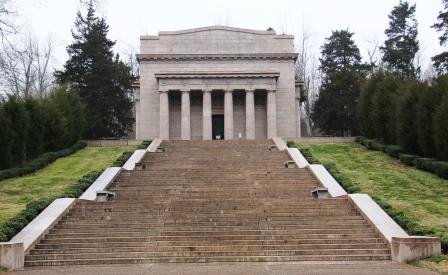
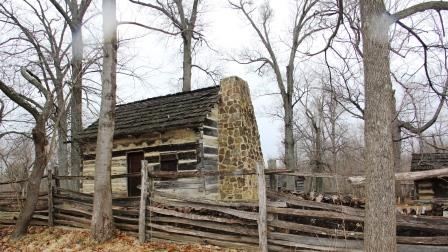
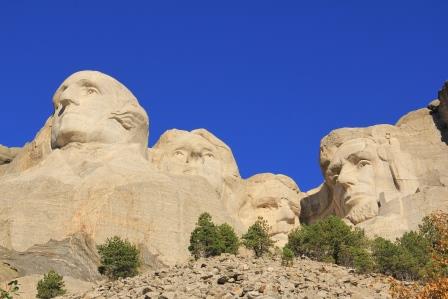
There are plenty of Lincoln sites outside of Illinois, too, like his birthplace and First Lincoln Memorial in Kentucky, his Indiana boyhood home, and of course, his place of honor on Mount Rushmore.

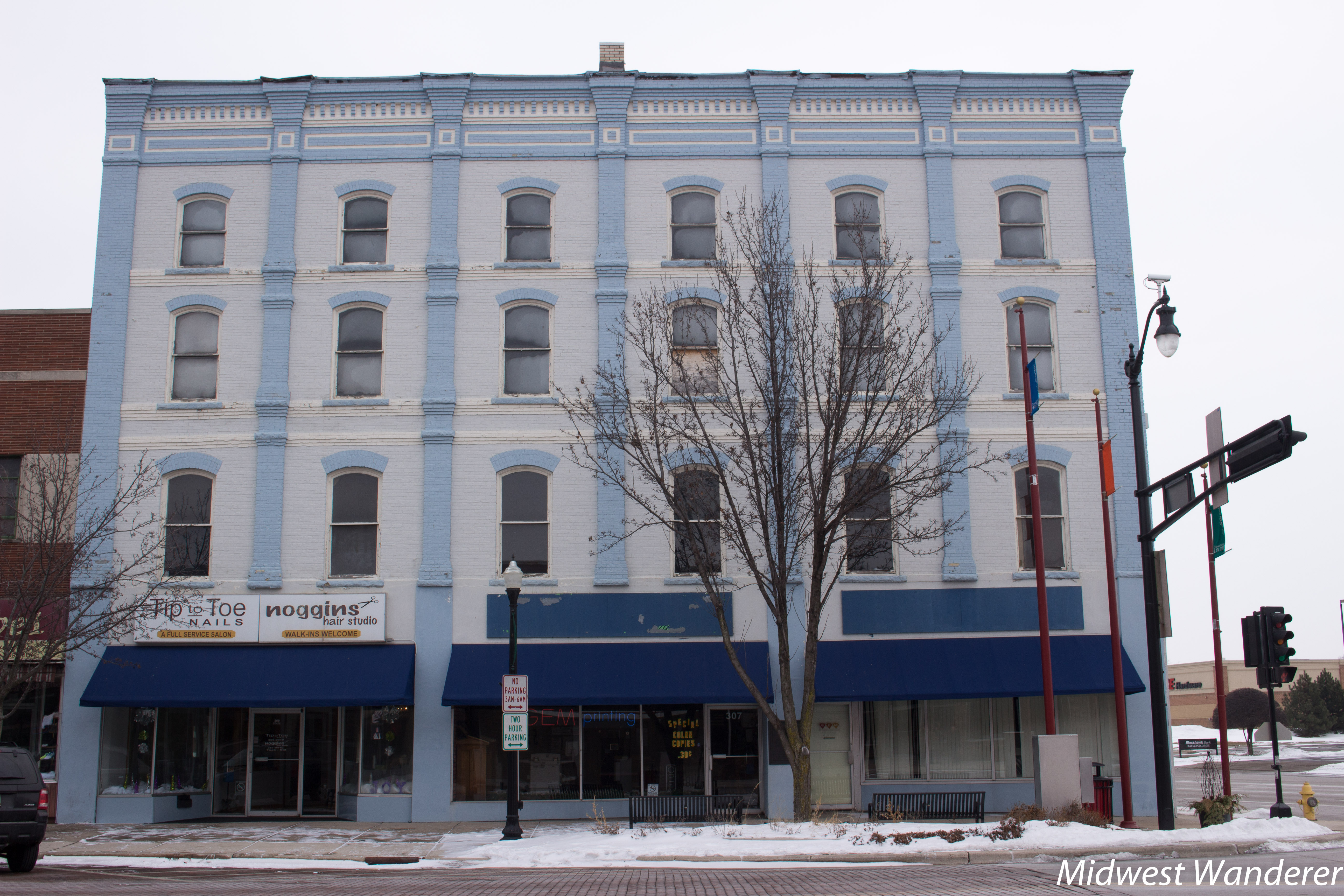
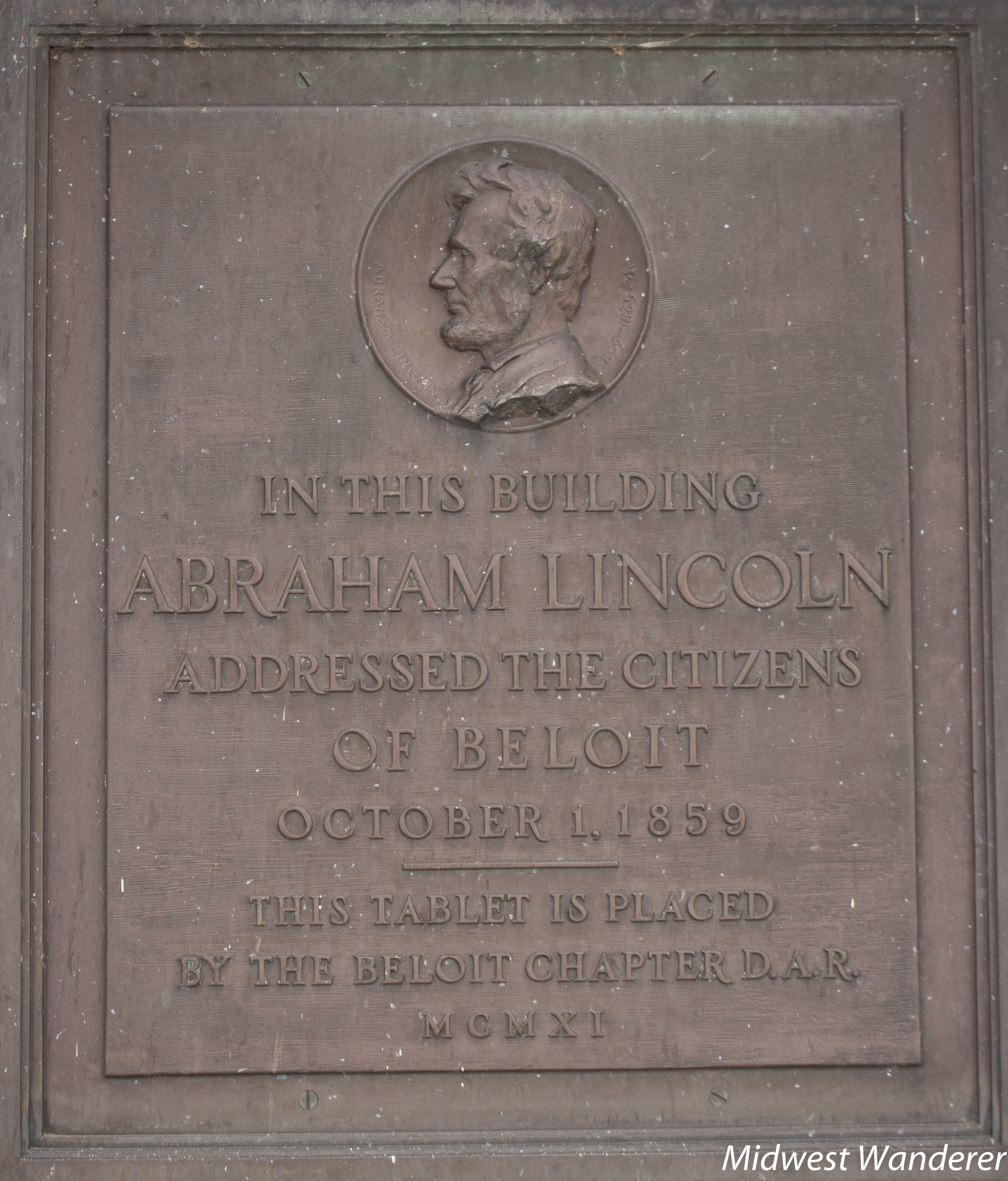
Lincoln_memorial_KYLincoln Cabin, IndianaMt Rushmore 11Occasionally, however, Lincoln pops up where you least expect him. We found him recently in Beloit, Wisconsin. Skip and I were browsing the shops in the downtown area when we wandered past this building and noticed the plaque commemorating Lincoln’s 1859 visit.

1502_Lincoln_in_Beloit-4104 1502_Lincoln_in_Beloit-4096In what unexpected place have you found a Lincoln site? Let me know in the comments below.

Thank you for reading Midwest Wanderer. Don’t miss a post. Enter your e-mail address below and click Subscribe to be notified whenever I publish another post. Subscription is FREE.


Beloit International Film Festival: What to Expect

Beloit International Film Festival: What to Expect

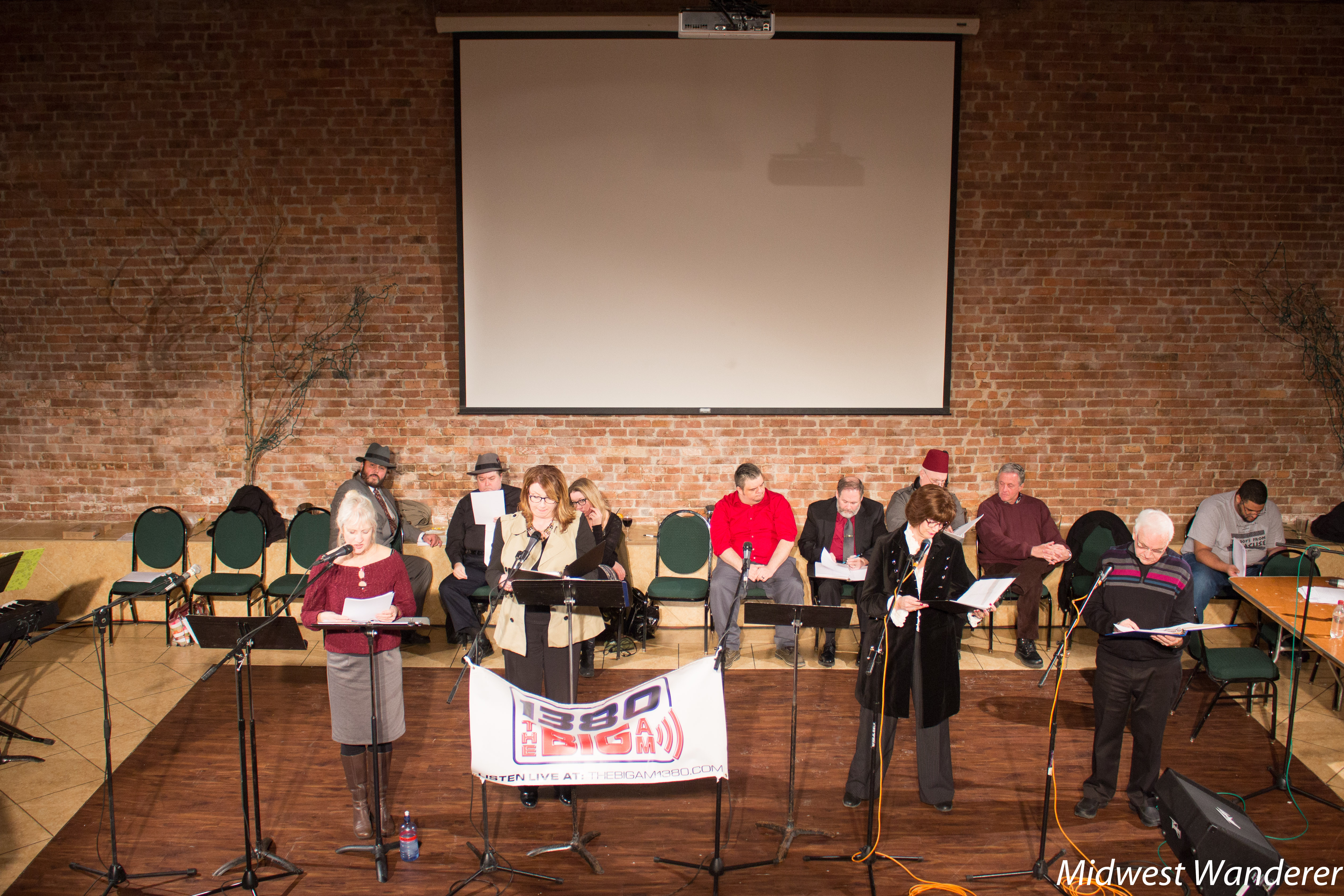
The term “film festival” always brought a picture to my mind of a series of artsy films with deep meanings I didn’t understand, mostly in non-English languages with subtitles. When I was invited to the Beloit International Film Festival (BIFF), I thought why not? I’m always up for a new adventure, I was curious, and I saw there was going to be a Grease sing-along on Saturday night.

Read more

Mount Rushmore at Sunrise: A Spectacular Show

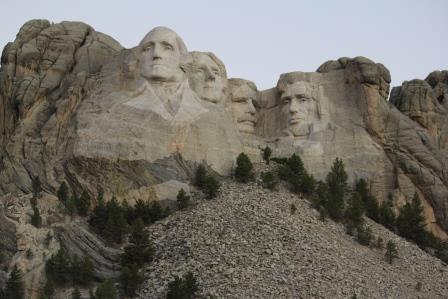
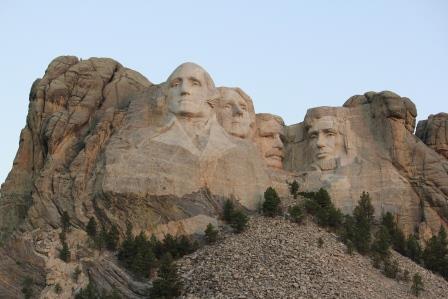
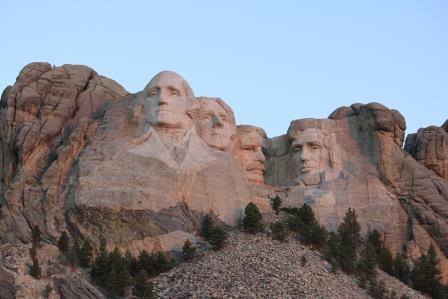
I finally made it to Mount Rushmore. For 40 years I’d wanted to see the likenesses of George Washington, Thomas Jefferson, Abraham Lincoln and Theodore Roosevelt carved into the mountain’s granite, or “the heads,” as my daughter referred to them. For one reason and then another, I never made it there until last fall. It was well worth the wait, and getting up before dawn to see the sunrise was a small price to pay for the spectacular show our presidents put on for us.

Don’t miss a Midwest Wanderer post.  For a FREE subscription, enter your e-mail address in the Subscribe2 box to the left and click Subscribe.

Our group arrived at dawn, just as the skies were beginning to lighten from black to gray, a late September chill in the air. Only a few others besides our group were there that early, before the rush of tourists, allowing us to position ourselves for the best photo shots of the monument.

Mt Rushmore 2

As the sun began to come up, the stone took on a peach cast against the powder blue sky.

Mt Rushmore 3

The coloring became more vibrant as the sun peeked higher above the horizon …

Mt Rushmore 4

… until the mountain was seemingly on fire and the sky a bright azure.

Mt Rushmore 5

As the sun rose higher, the faces softened.

Mt Rushmore 6

Mt Rushmore 7

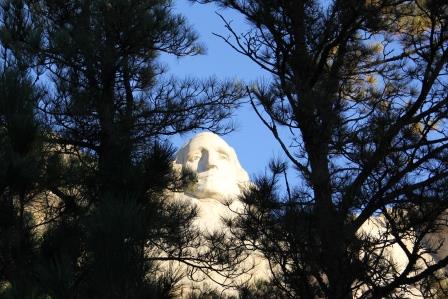
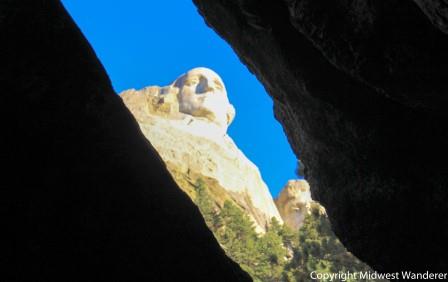
With the breathtaking sunrise over, it was time to explore a little more. The Presidential Trail allows you to get up closer to the monument and presents some great angles, including from between trees and rocks.

Mt Rushmore 11

Mt Rushmore 8

Mt Rushmore 10

Later I noticed another great view from the windows in the café.

Mt Rushmore 12

I know it isn’t every day that the sky is as blue as it was on that September morning, not a cloud in the sky. I’m just glad that after waiting over 40 years to see “the heads,” we were blessed with perfect weather and a perfect sunrise.

Mount Rushmore is located in Keystone, South Dakota, about a half hour southwest of Rapid City. Check the web site for directions, operating hours and other details.

Disclosure: My visit to Mount Rushmore was hosted by the South Dakota Department of Tourism. However, all opinions in this article are my own.

Other posts you may enjoy:

Prehistoric History Uncovered at Mammoth Site of Hot Springs, South Dakota

Exploring Native American Heritage in South Dakota

The Journey Museum, Rapid City: Black Hills History and Culture

Chapel in the Hills, Rapid City: Norwegian Serenity

Thank you for reading Midwest Wanderer. Don’t miss a post. Enter your e-mail address below and click Subscribe to be notified whenever I publish another post. Subscription is FREE. After subscribing, be sure to click the link when you get the e-mail asking you to confirm.   – Connie


Rockford Art Museum: From Sketch Club to Esteemed Gallery

Rockford Art Museum: From Sketch Club to Esteemed Gallery

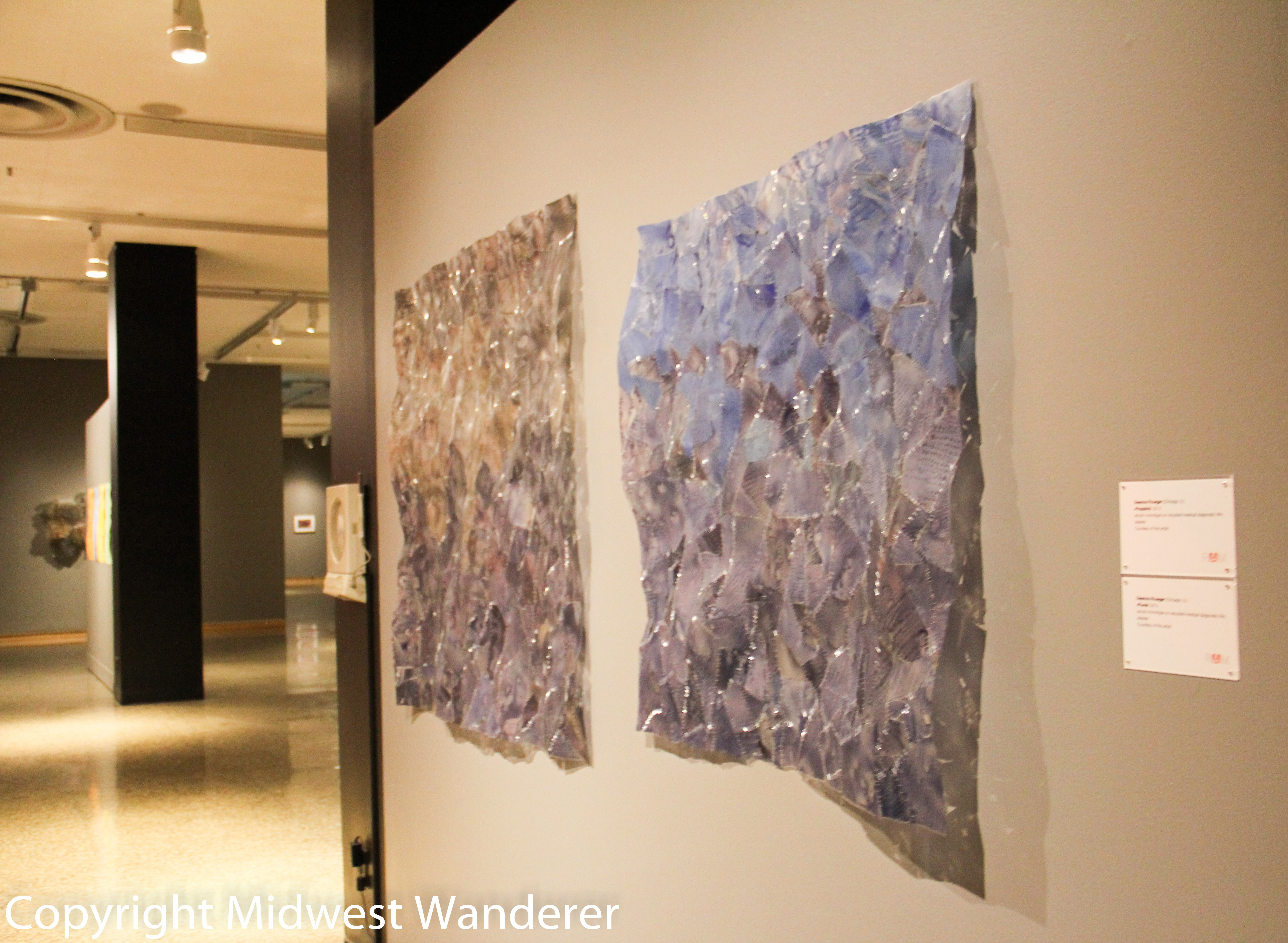
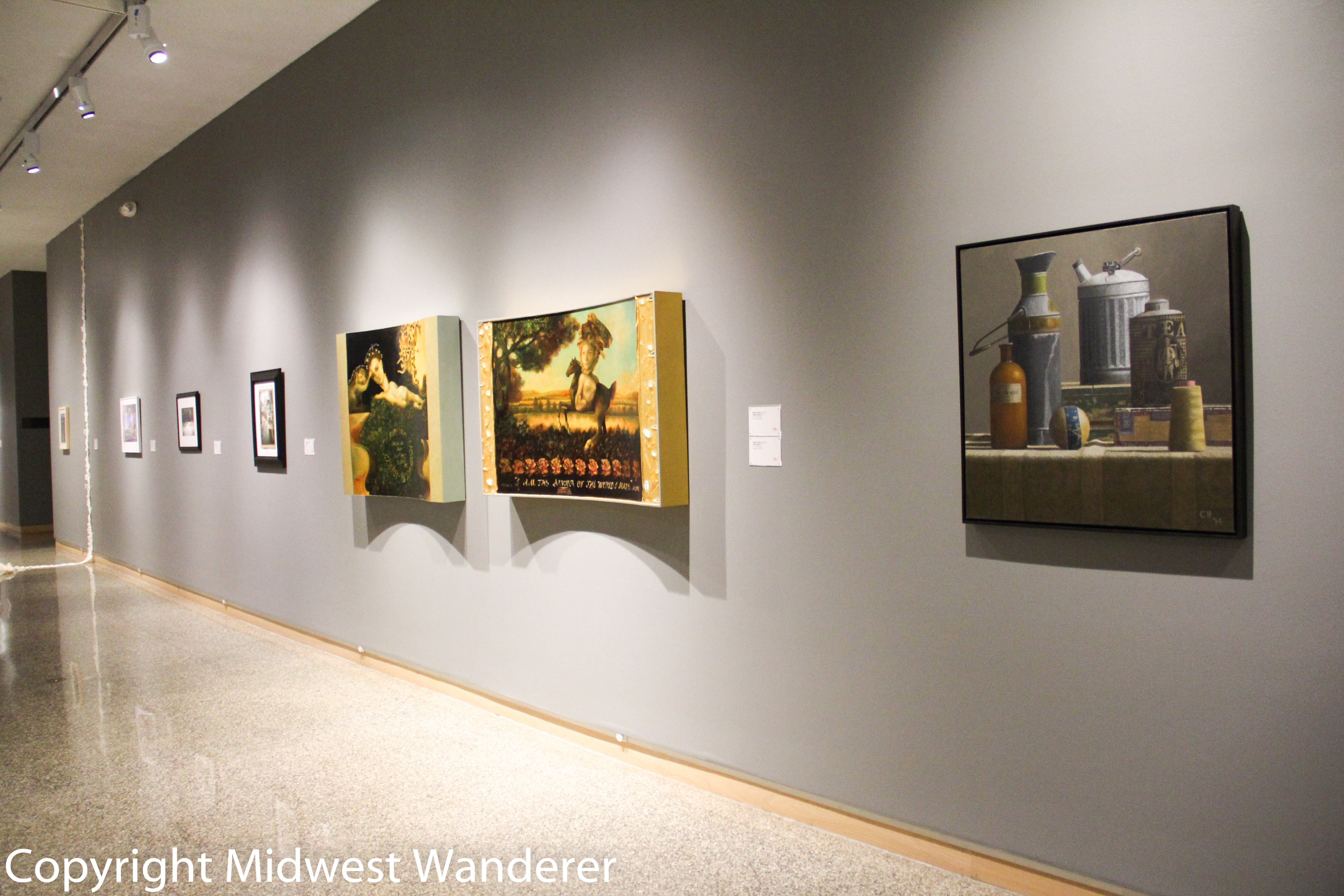
Rockford Art Museum-9677The Rockford Art Museum began as a local sketch club over a hundred years ago. Today, with 17,000 square feet of exhibition space and 1700 works of art in its permanent collection, it’s one of the largest art museums in Illinois. The museum features 19th and 20th century art. A big focus is on modern and contemporary works of art, but also includes American Masters, photography, contemporary glass and outsider art collections.

Rockford Art Museum-9674Rockford Art Museum-9673Rockford Art Museum-9672The museum’s three galleries are spread over two floors. The lower level exhibitions are from the permanent collections, including a couple of sculptures by famed Illinois artist Lorado Taft. We had seen several of Taft’s sculptures at the Krannert Art Museum at the University of Illinois, so seeing these additional sculptures was a nice tie-in.

Some of my favorite pieces, because they were really funky, were part of last summer’s Oddities and Curiosities exhibition. I was particularly fascinated by Scott Roberts’ video installation, Viola, a mirror in which you see an image of the artist’s grandmother instead of yourself when you look into it. However, it isn’t a still image; rather, you see her blink and move her eyes.

Don’t miss a Midwest Wanderer post.  For a FREE subscription, enter your e-mail address in the Subscribe2 box to the left and click Subscribe.

One of the museum’s prized collections was a donation from Francis and June Spiezer, that includes pieces from Chicago artists, many considered to be the most important in the art world.

The main floor of the museum is designated for temporary exhibitions that change three times a year. Our visit happened to fall during the Rockford Midwestern Biennial. Every other year artists from across the Midwest submit pieces to this juried show, the jurors brought in from the outside. All pieces submitted are required to have been created within two years prior to the show. Besides monetary awards, one piece is awarded the Dean Alan Olson Purchase Award. That piece goes into the Rockford Art Museum’s permanent collection.

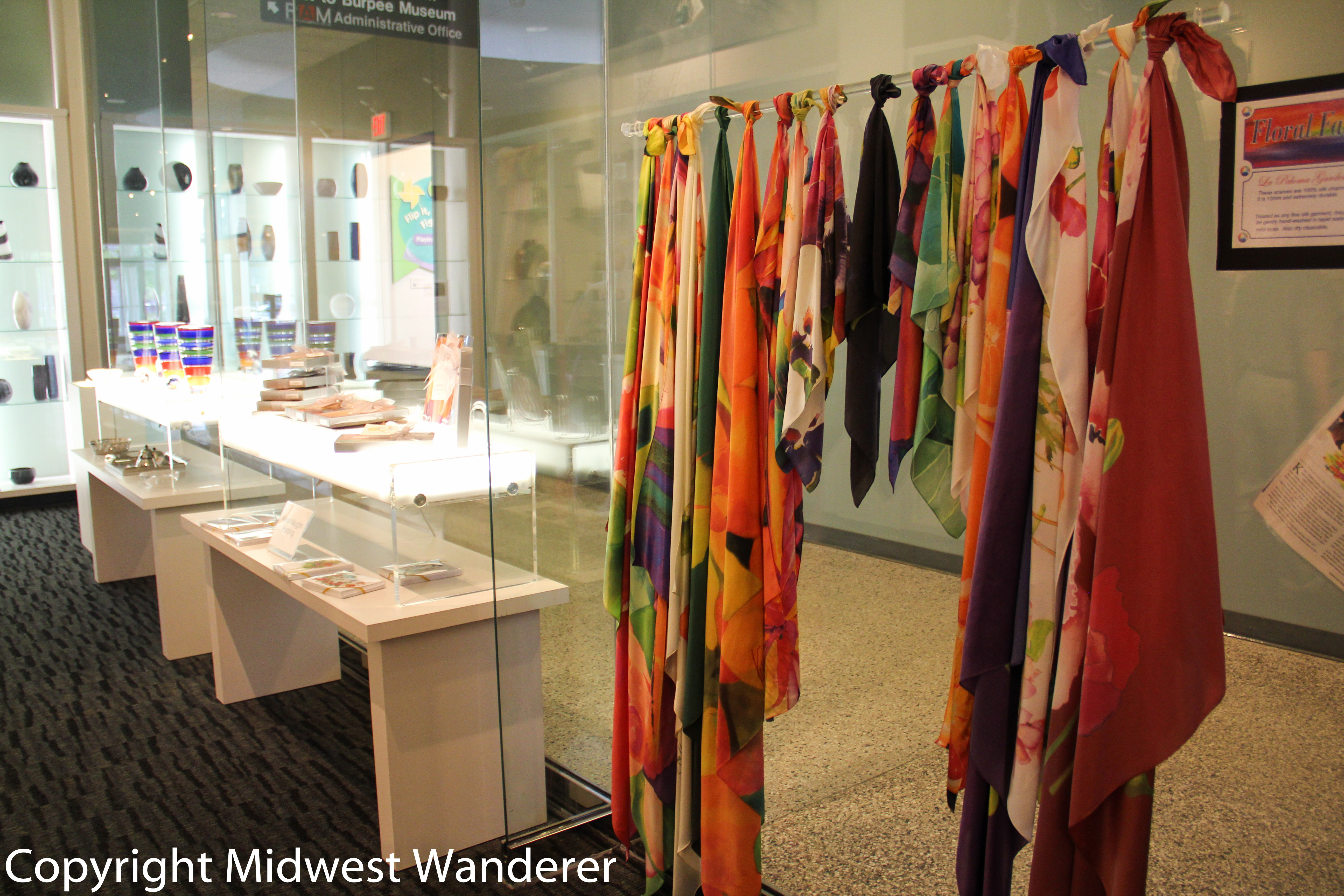
The main floor also is where you’ll find the museum store, a great places to purchase unique gift items.

Rockford Art Museum-9680The Rockford Art Museum, located in the Riverfront Museum Park at 711 N Main Street in downtown Rockford, Illinois, is open daily from 10 to 5. Check the web site for directions and admission rates.

The museum campus, a Rockford Park District property, is also home to the Discovery Center Museum, Rockford Dance Company, Rockford Symphony Orchestra and Northern Public Radio. I’m no art critic, but I thought this staircase in the entryway of the museum campus was a work of art itself.

Rockford Art Museum-9676Disclosure: Our visit to the Rockford Art Museum was hosted by the Rockford Area Convention and Visitors Bureau and the Rockford Art Museum. However, opinions expressed in this post are my own.

Thank you for reading Midwest Wanderer. Don’t miss a post. Enter your e-mail address below and click Subscribe to be notified whenever I publish another post. Subscription is FREE. After subscribing, be sure to click the link when you get the e-mail asking you to confirm.   – Connie


Isle a la Cache Museum: Discover the Fur Trade on the Island of the Hiding Place

Isle a la Cache Museum: Discover the Fur Trade on the Island of the Hiding Place

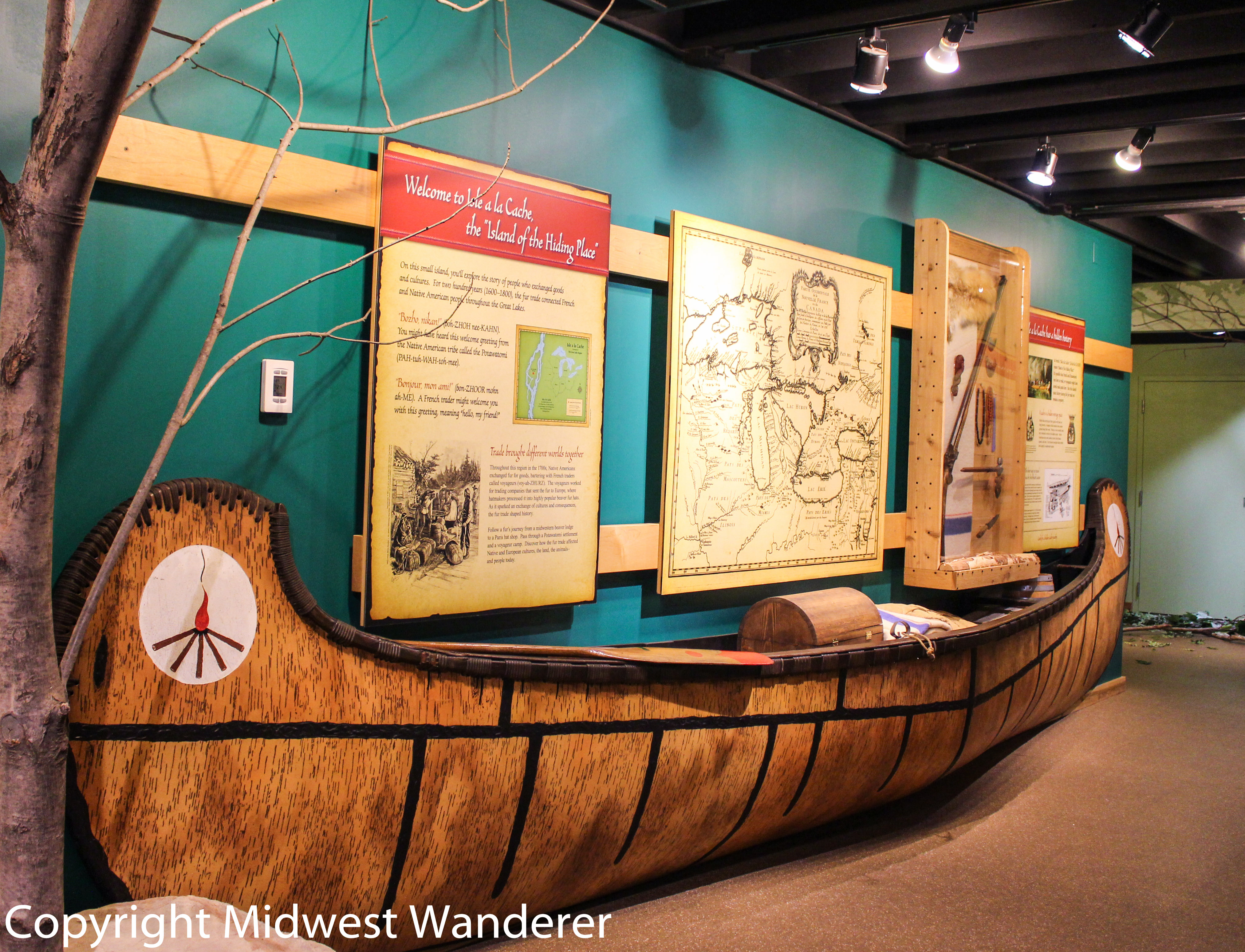
Isle a la Cache-3919“Island of the hiding place” is the literal translation of Isle a la Cache, a tiny island in the DesPlaines River in Chicago’s suburban Romeoville. The fur trade was a huge industry in the 1600s and 1700s, and Illinois’ abundant interconnected web of waterways made the area a focal point for trade. Isle a la Cache was a middle ground for trading. It was here that voyageurs often camped, stored goods and traded with the native Potawatomi. A rendezvous took place annually at Isle a la Cache, a big event in which traders met with Native Americans for trading.

The museum begins with the voyageurs, whose trips would often last about eight months. They plied the waterways from Canada down into Illinois in canoes. They carried all the provisions they’d need for the entire trip, plus items for trade. Their loads could weigh a few thousand pounds. They’d often bury some of their provisions in caches and come back for them to be used on the return trip.

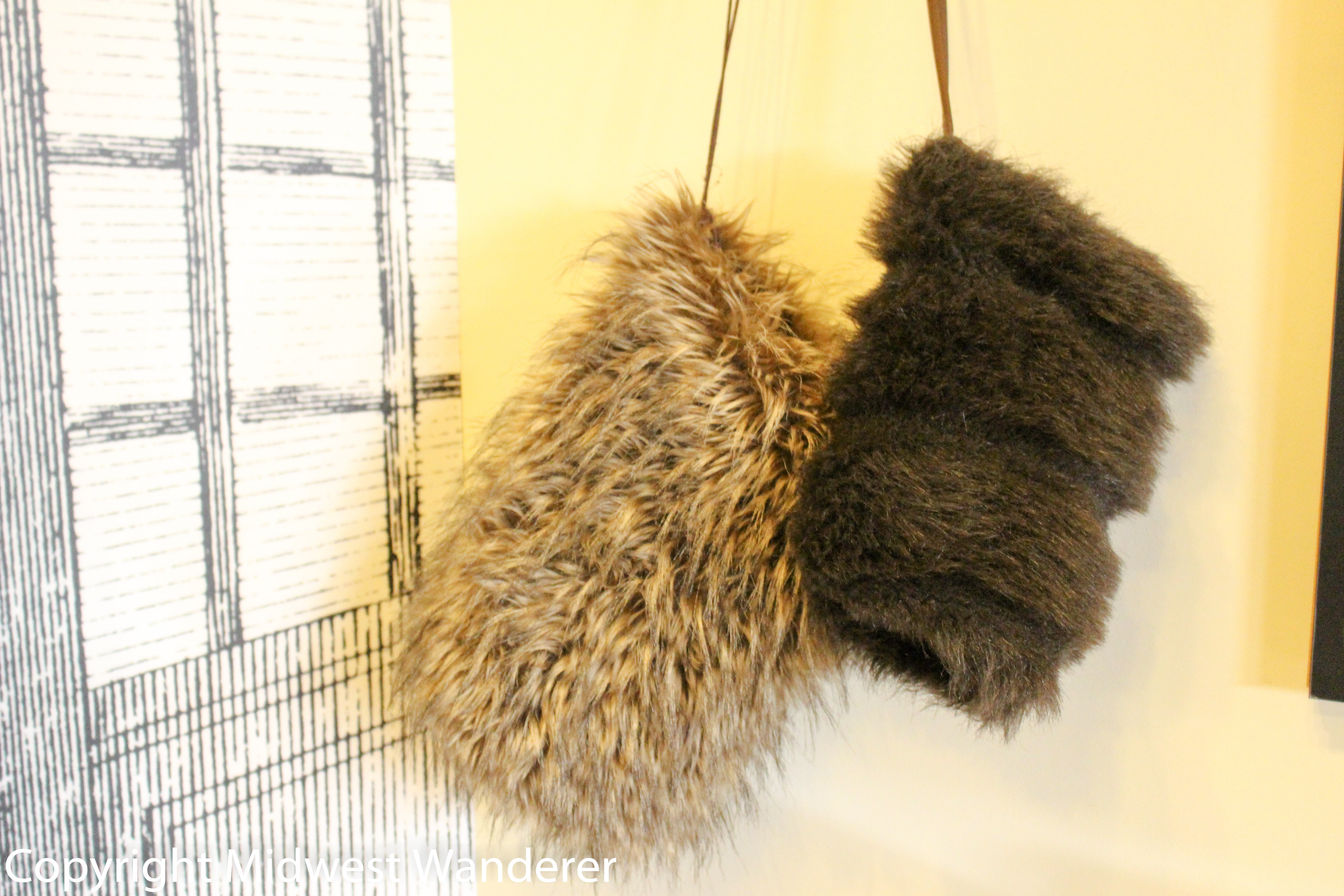
Isle a la Cache-3921Voyageurs brought with them steel tools, firearms and other items Native Americans didn’t have the means to produce themselves. They traded for some food but mostly for fur, specifically beaver pelts. The beaver population was abundant in the 1600s to 1700s, and their water repellant fur was ideal for hats. The Potawatami could predict when the beavers would be in their lodges, so they were easy to trap. The voyageurs sent the pelts to Europe where milliners transformed them into hats. By the early 1800s the beaver population had declined to near extinction.

Don’t miss a Midwest Wanderer post.  For a FREE subscription, enter your e-mail address in the Subscribe2 box to the left and click Subscribe

The museum segues to the life of the Potawatami. A Potawatami wigwam is on display, as well as tools, clothing and other day-to-day items.

Isle a la Cache-3928Often French traders would marry Potawatami women, giving them easier access to trade items. Their children were referred to as Metis. Although Metis had insight to both cultures, neither culture fully accepted them.

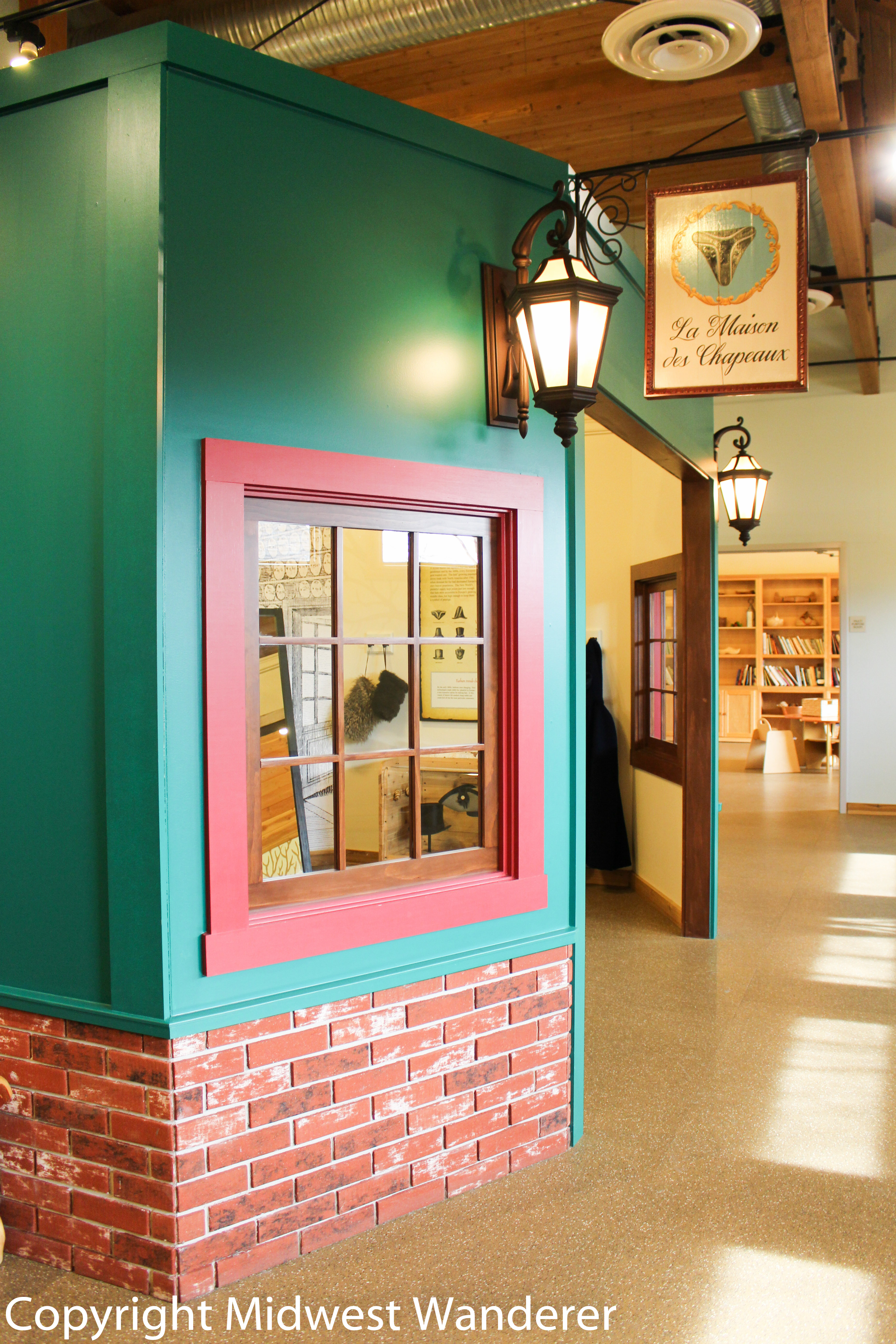
The museum exhibits ends with a recreated French hat shop with samples of hats and muffs that may have been made of beaver fur. You can learn more about the area’s past in the museum’s library.

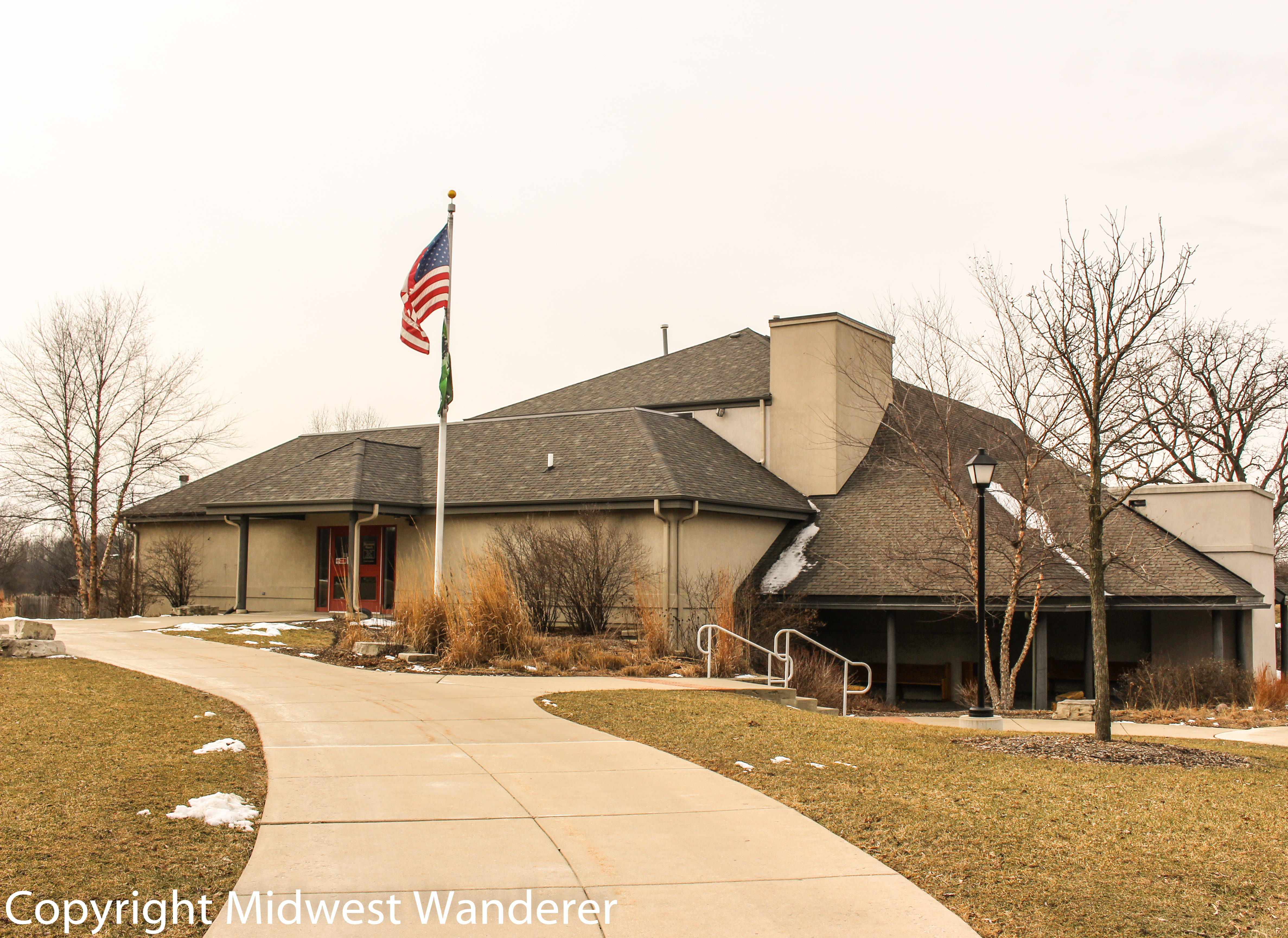
Isle a la Cache-3931Isle a la Cache-3932The Isle a la Cache Museum is located at 501 E Romeo Road (135th Street) in Romeoville, just east of Route 53 (the Historic Route 66). The museum is open Tuesday through Sunday. Check the web site for hours.

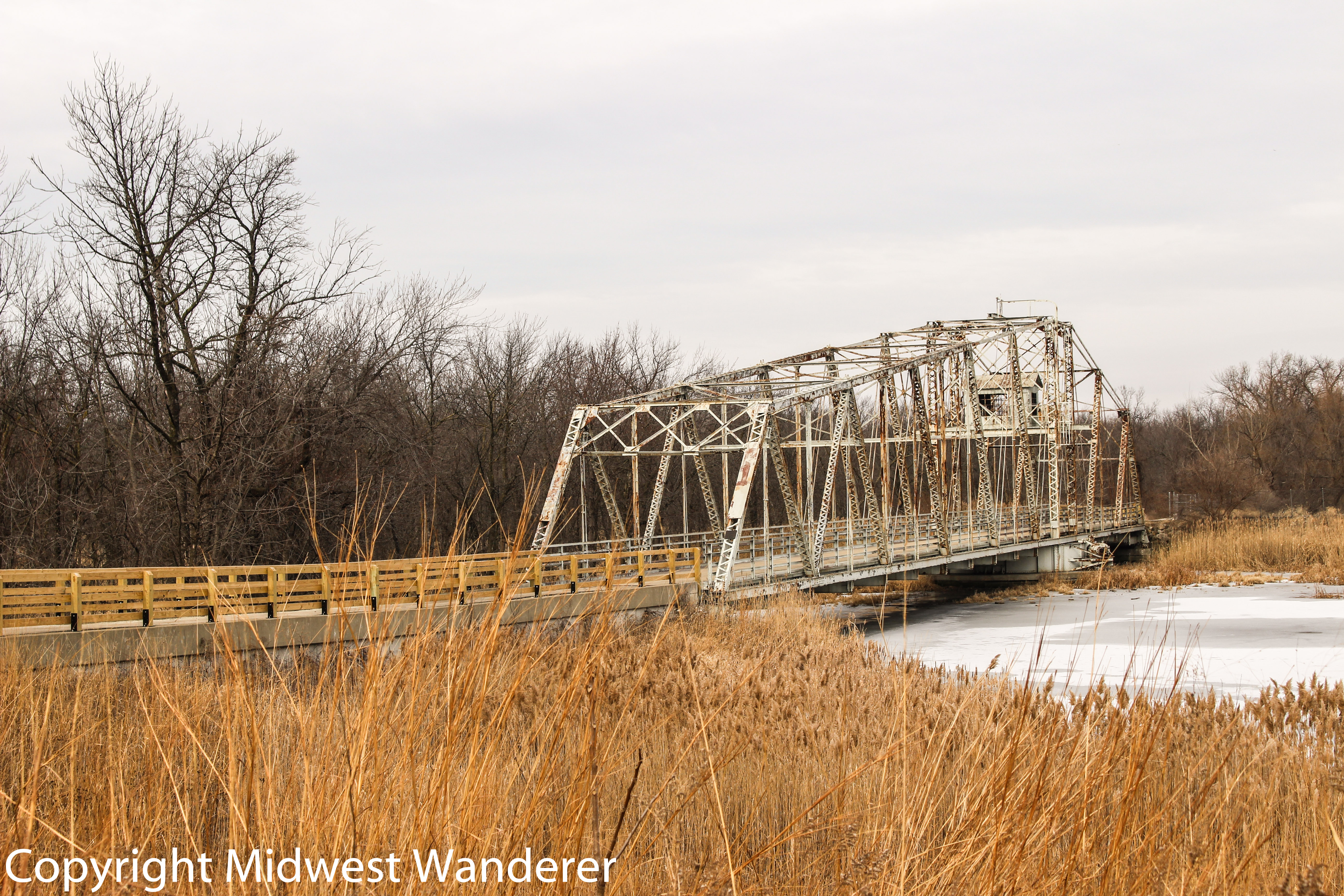
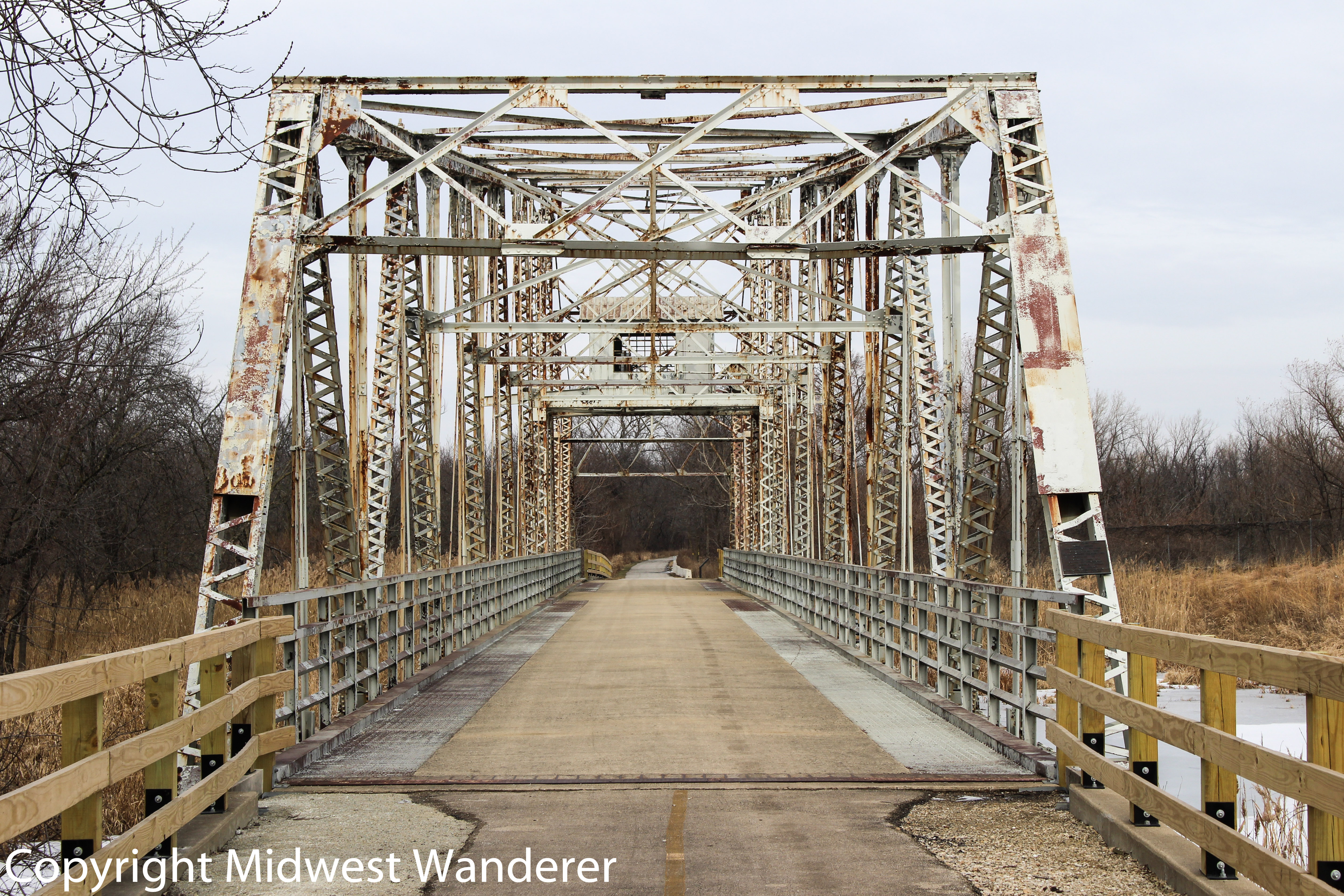
While you’re there, drive an eight of a mile farther east to the Centennial Trail. On the north side of 135th Street, check out the old swing bridge, built in 1899. The bridge spanned the I&M Canal until 1996 when a stationary bridge replaced the swing bridge, and the swing bridge was relocated to the trail.

Isle a la Cache-3937Isle a la Cache-3944Thank you for reading Midwest Wanderer. Don’t miss a post. Enter your e-mail address below and click Subscribe to be notified whenever I publish another post. Subscription is FREE. After subscribing, be sure to click the link when you get the e-mail asking you to confirm.   – Connie


Other articles you may enjoy:

White Fence Farm, Romeoville IL: Popular Chicken Restaurant on Route 66

Hiking Starved Rock State Park in the Winter

Dell Rhea’s Chicken Basket: A Route 66 Icon

Wall Drug: From Free Ice Water to Free Fun

Wall Drug: From Free Ice Water to Free Fun

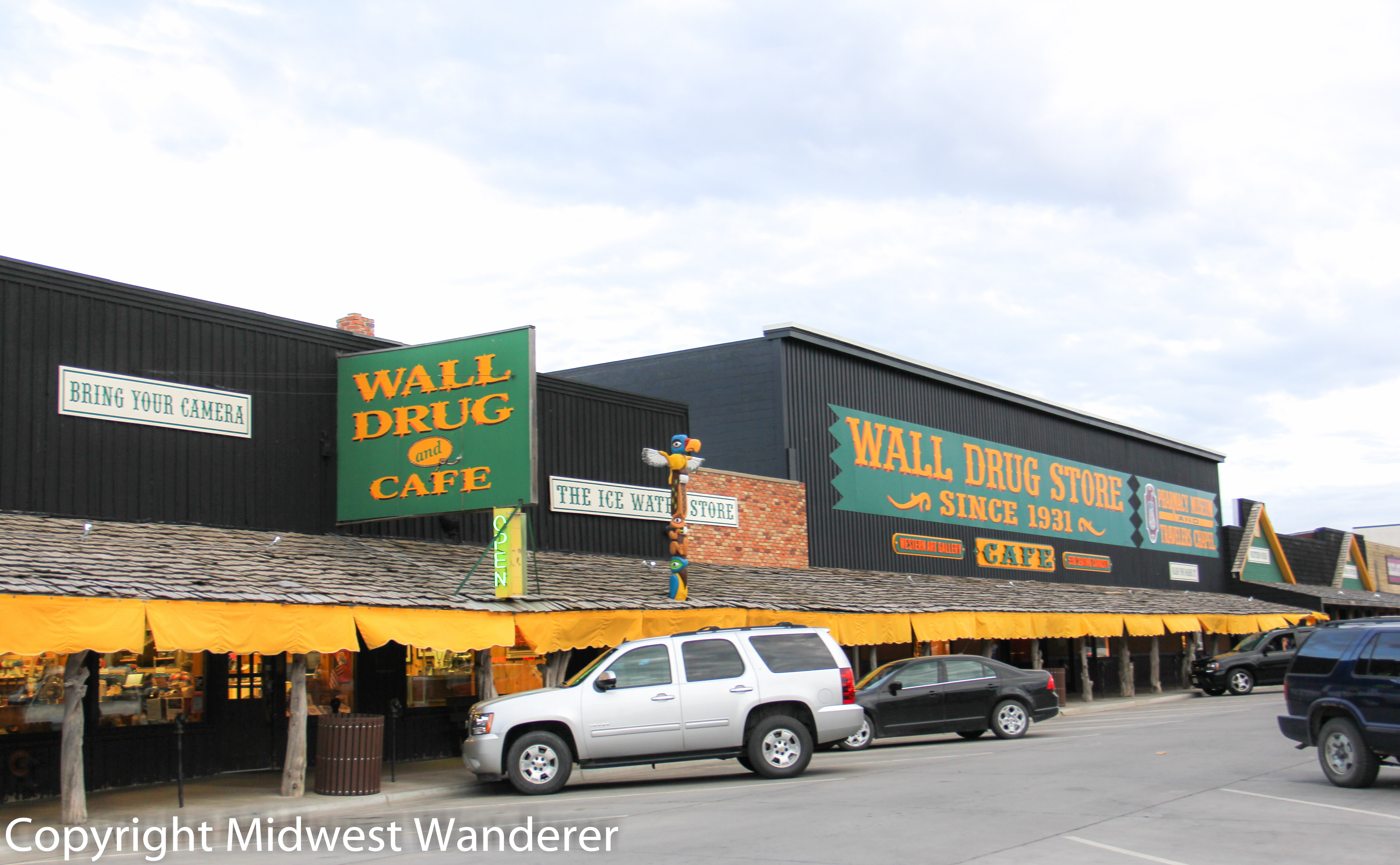
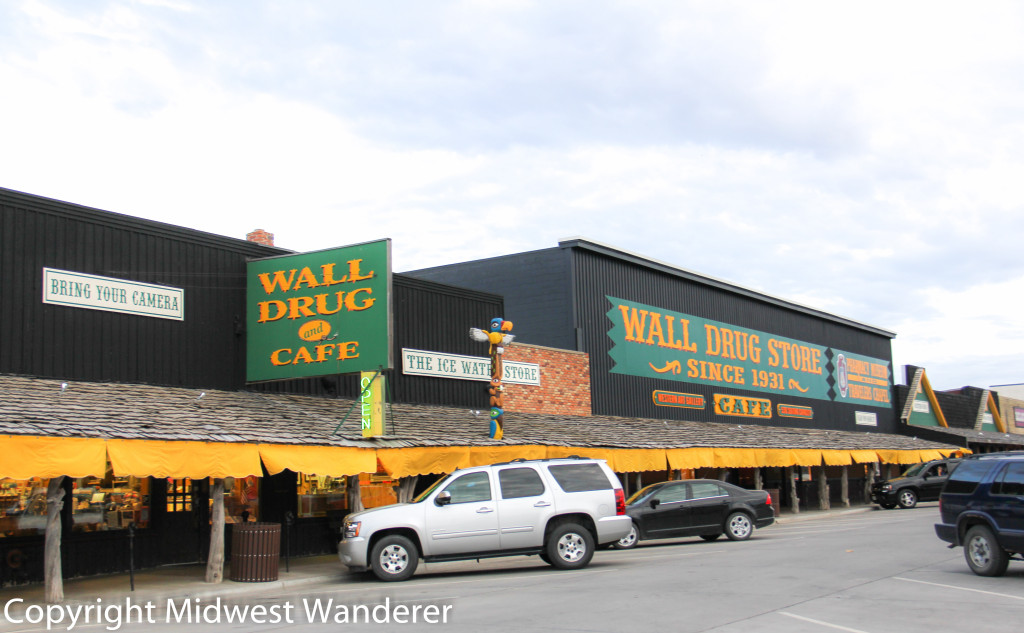
SD_Wall_Drug-0905It’s a restaurant. It’s an art gallery. It’s a souvenir shop. It’s a western town. Wall Drug in Wall, South Dakota, is all of those things, plus more, rolled into one. Most of all, it’s a tourist attraction not to miss. It wasn’t always that way, though.

Ted and Dorothy Hustead bought the drug store in Wall, South Dakota in 1931 during the midst of the Great Depression. They curtained off the back 20 feet of the 24 foot by 60 foot building for living space and gave themselves five years to succeed. Times were tough, and the store wasn’t on the main highway through town.

With six months left to the five year mark, during the heat of the summer back when there was no air conditioning, Dorothy suggested they put up signs along the highway advertising free ice water. Ted thought it was a silly idea but went along with it. He and a high school student painted and put up signs, Burma Shave style. Before Ted got back to the store, the first customer showed up. Ted put up 19 more signs, the customers kept coming, and the store kept growing. Today the store is across the street from the original, takes up 76,000 square feet and offers a whole lot more than free ice water.

Don’t miss a Midwest Wanderer post.  For a FREE subscription, enter your e-mail address in the Subscribe2 box to the left and click Subscribe.

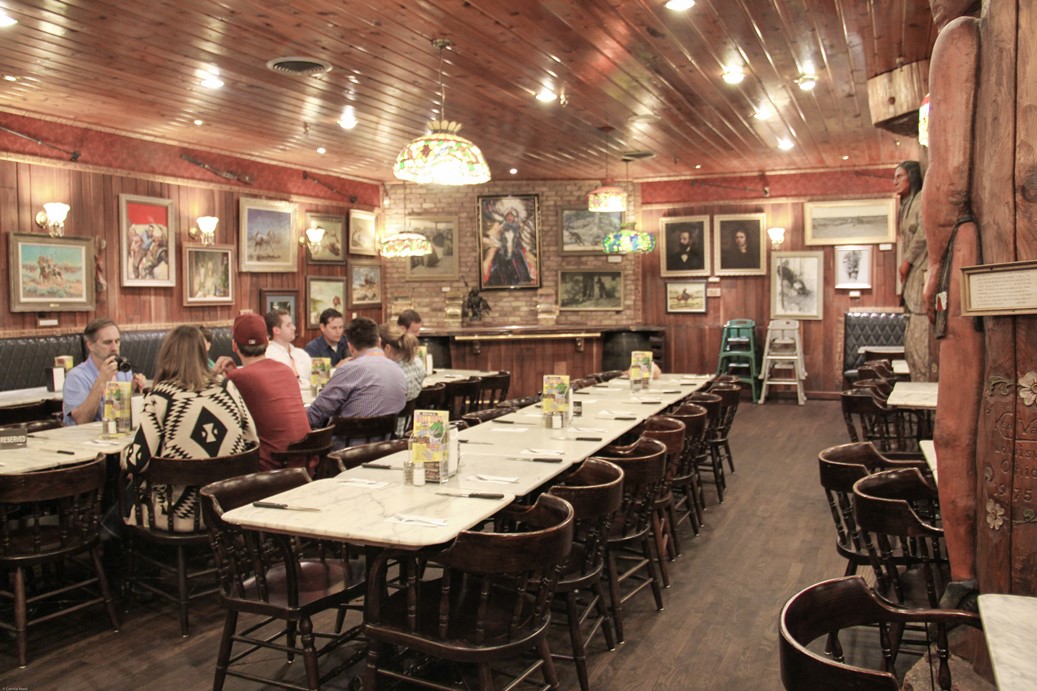
The group I traveled with had dinner at Wall Drug’s Western Art Gallery Restaurant, its walls lined with the largest privately owned western and illustration art in the United States.
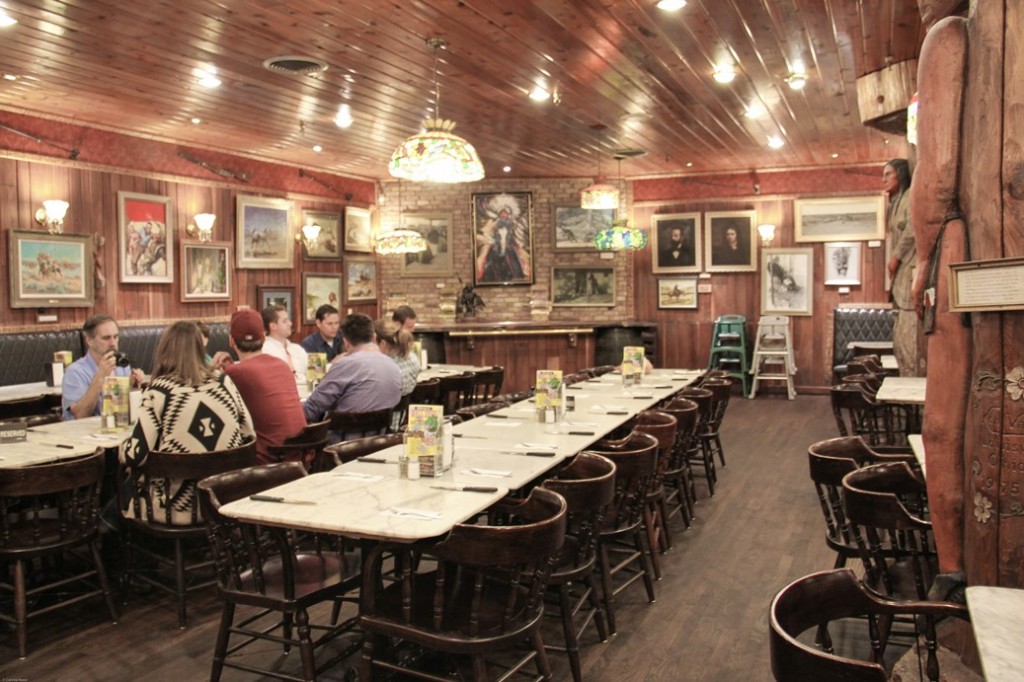
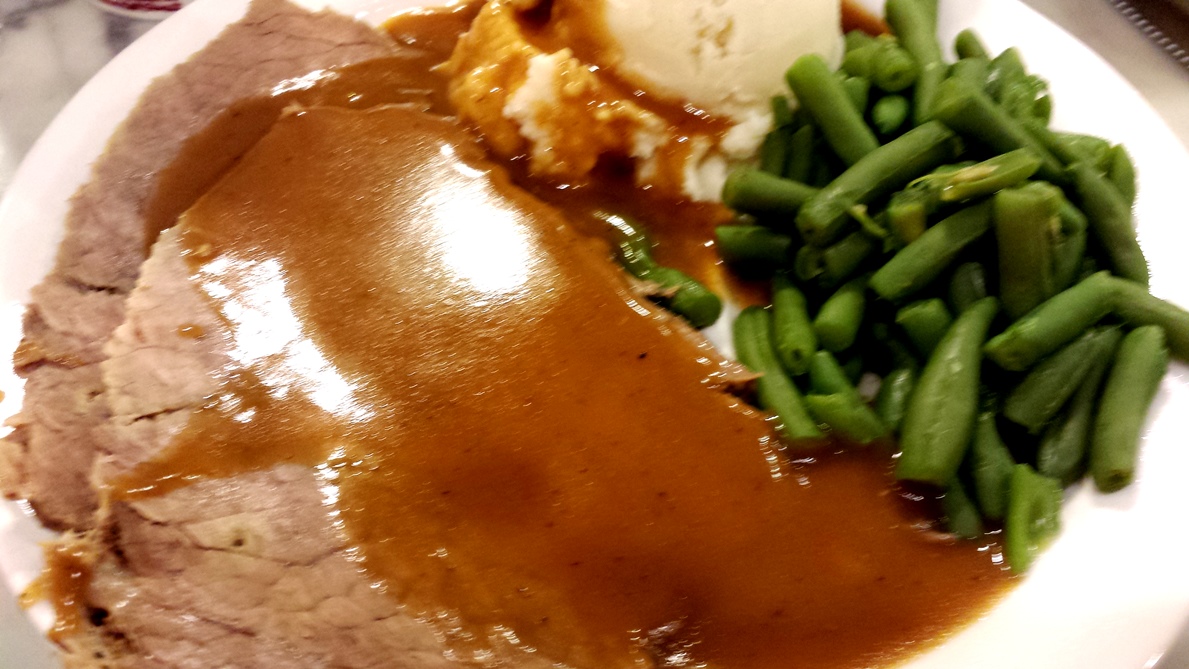
RestaurantWe dined on a comfort meal of roast beef, mashed potatoes and green beans. Wall Drug serves 30,000 pounds of roast beef every season. The buffalo burger is popular, too. Wall is famous for their doughnuts, as well. I tasted one and understand why.
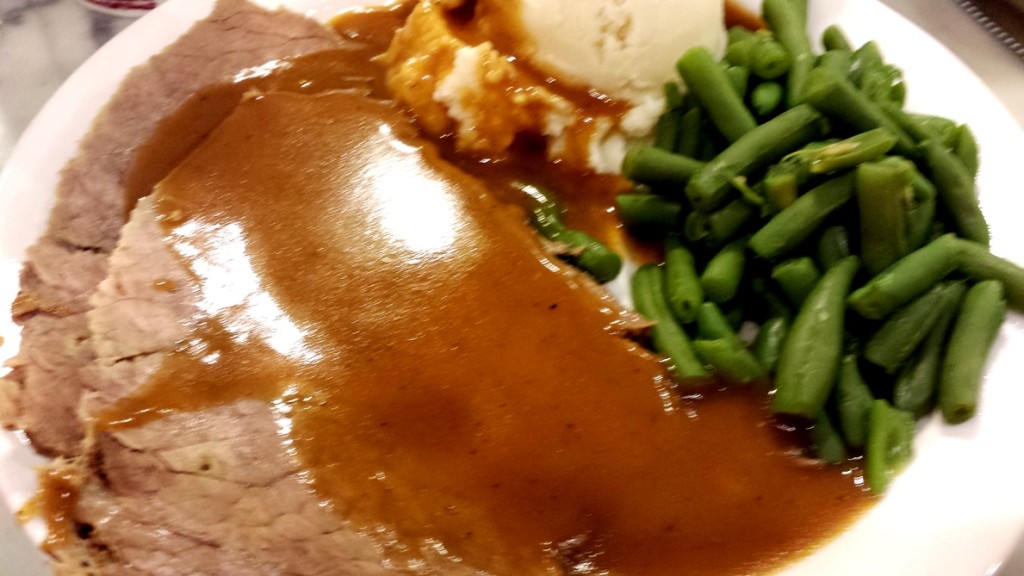
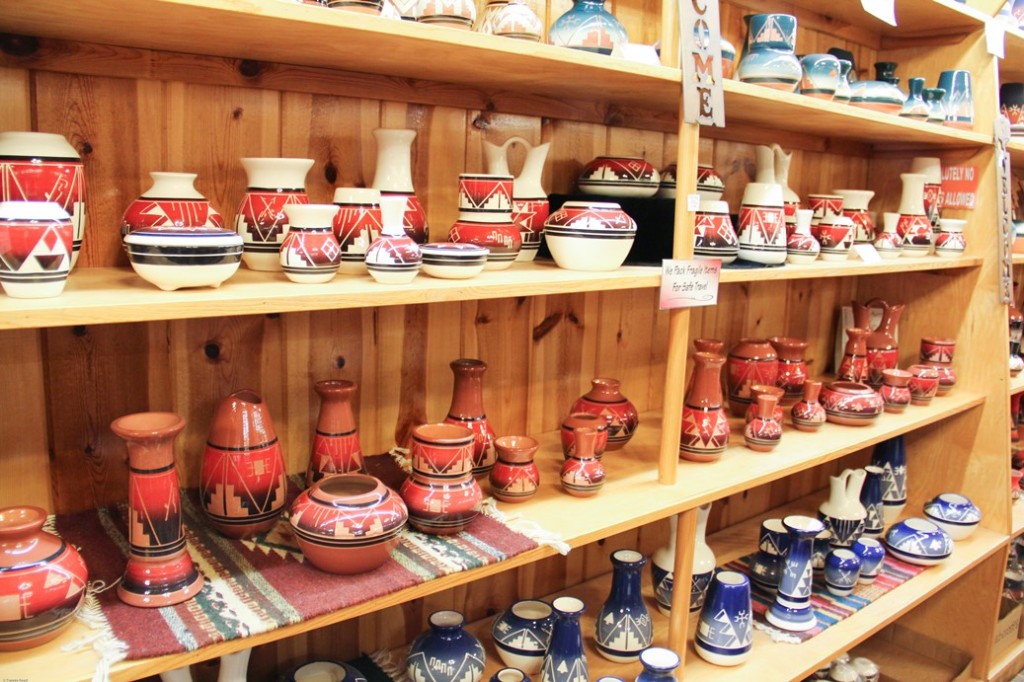
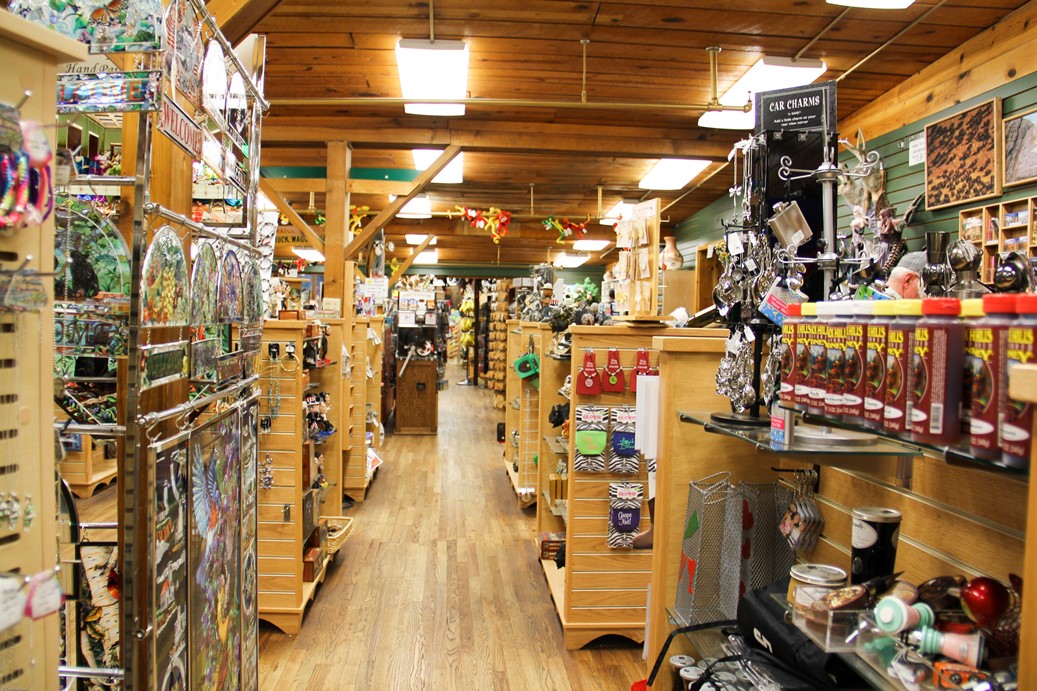
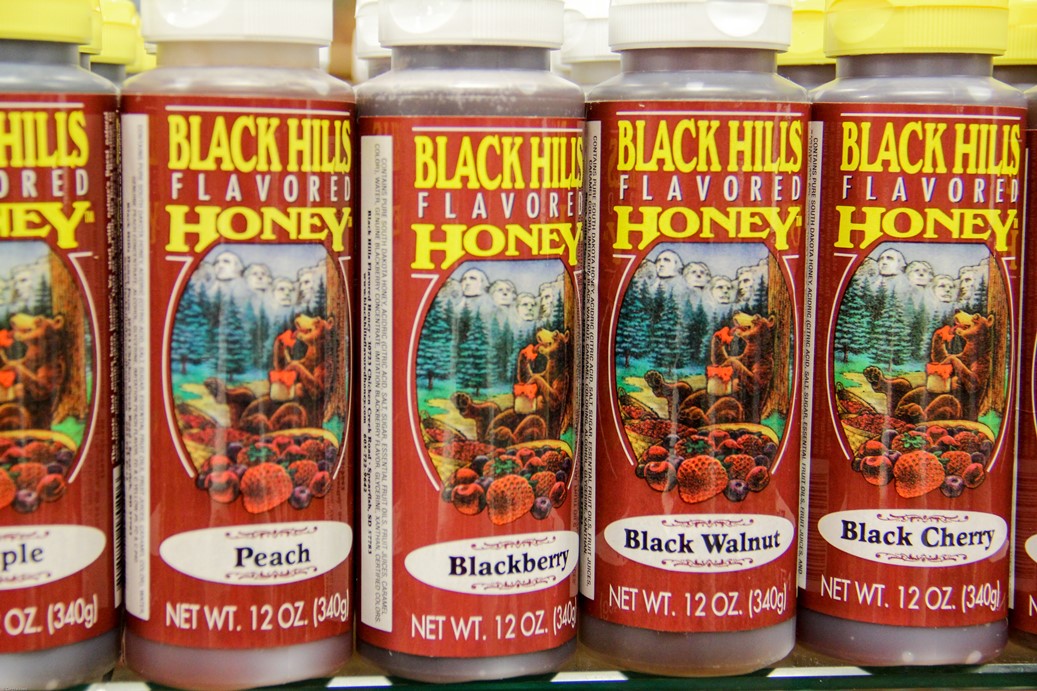
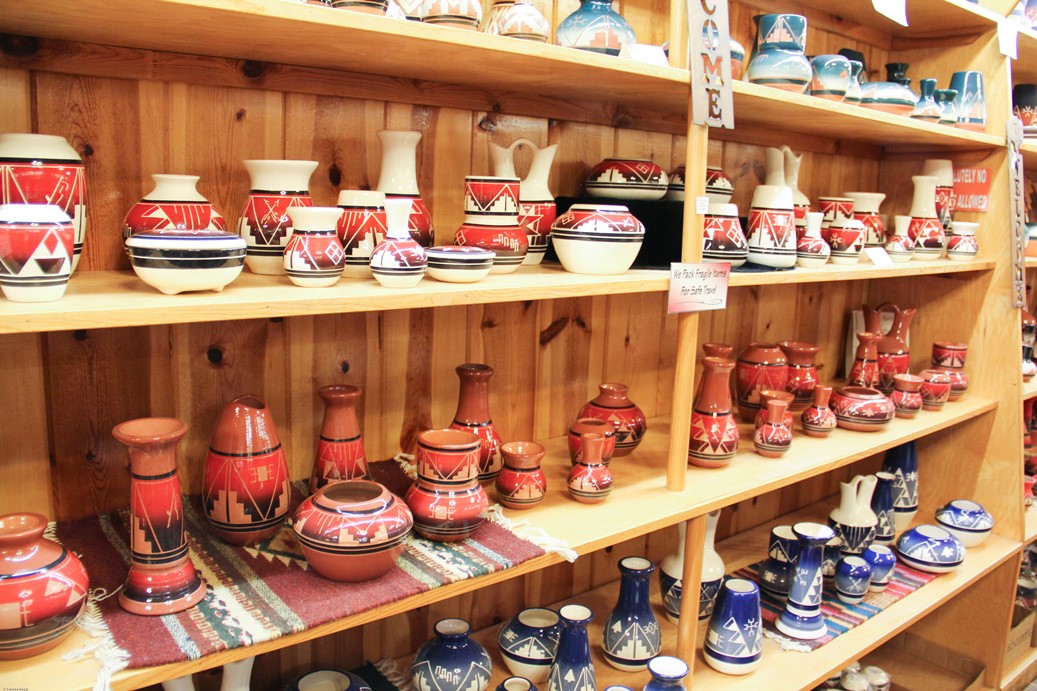
Roast_beefAfter dinner we roamed what seemed like a labyrinth of stores, one connected to another, going this way and that, shops selling souvenirs, western wear, specialty foods, pottery, and lots more.
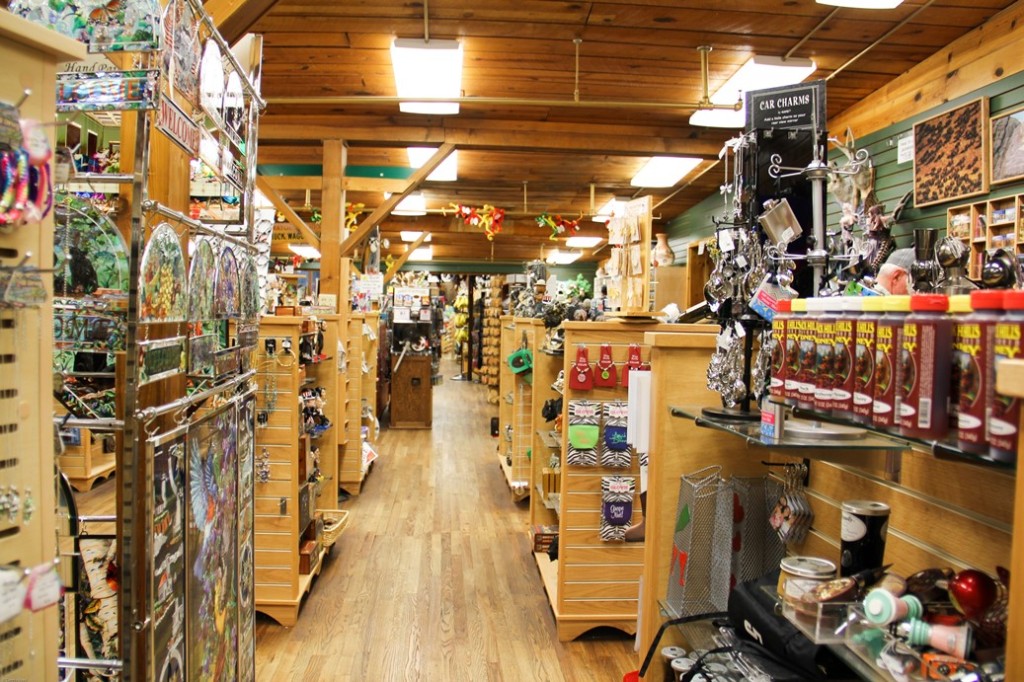
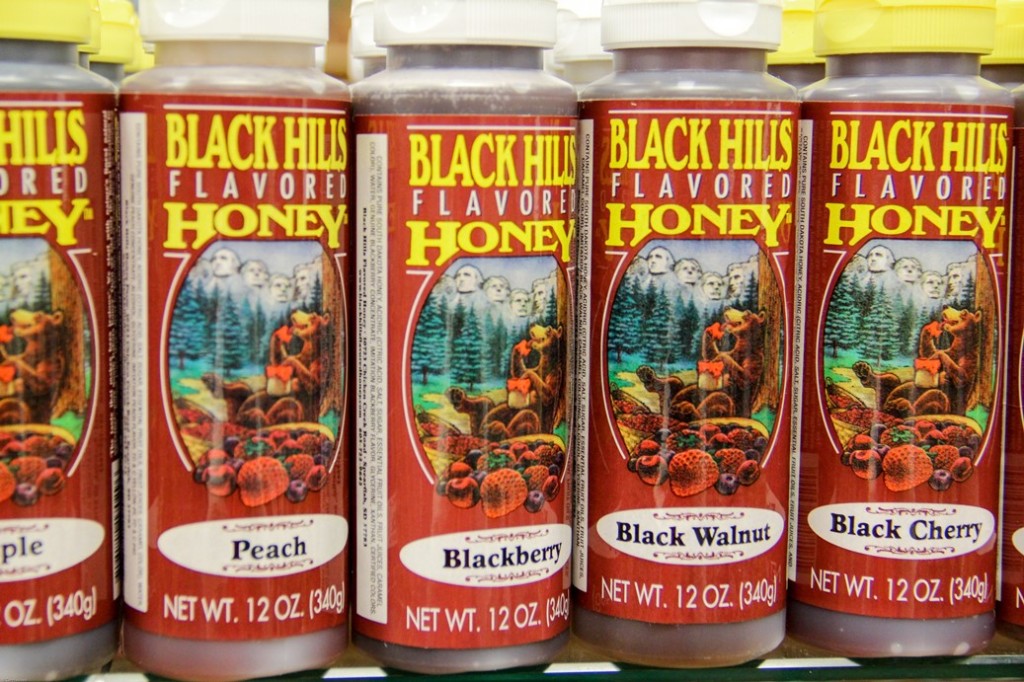
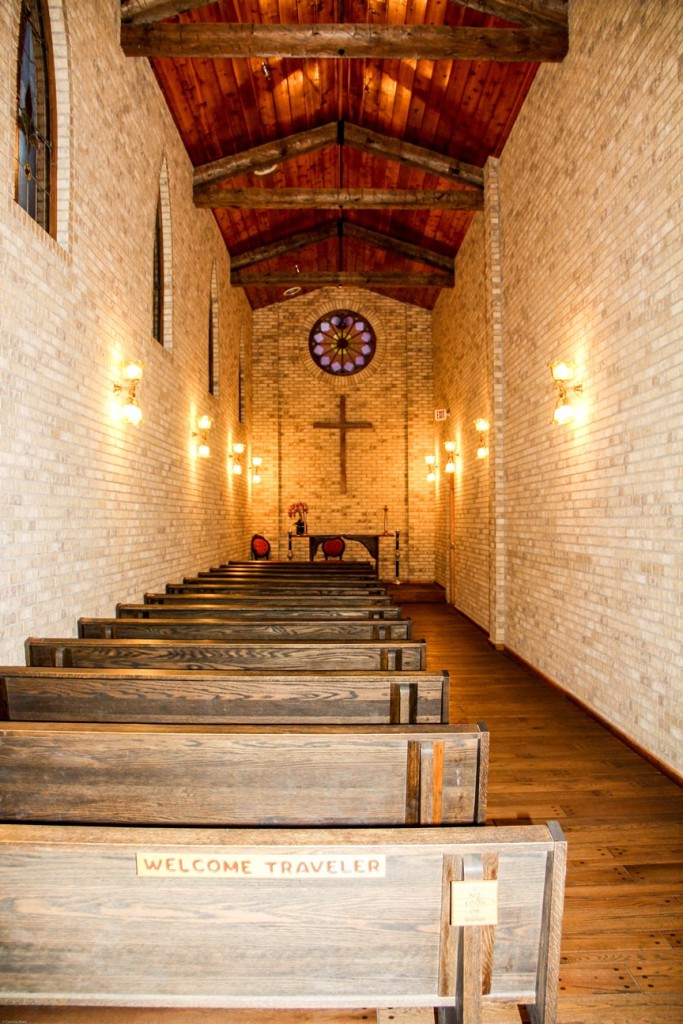
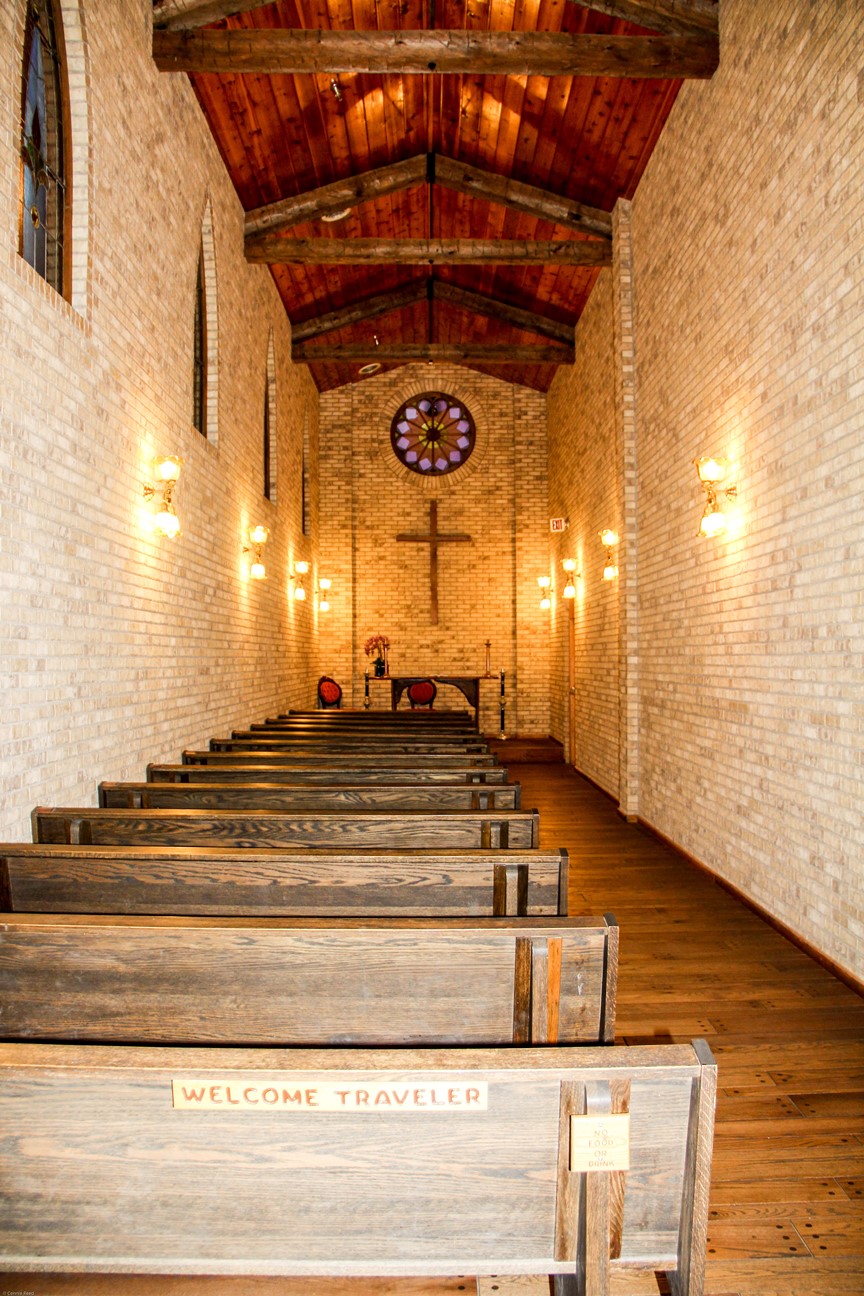
storehoneypotteryThere is even a traveler’s chapel.

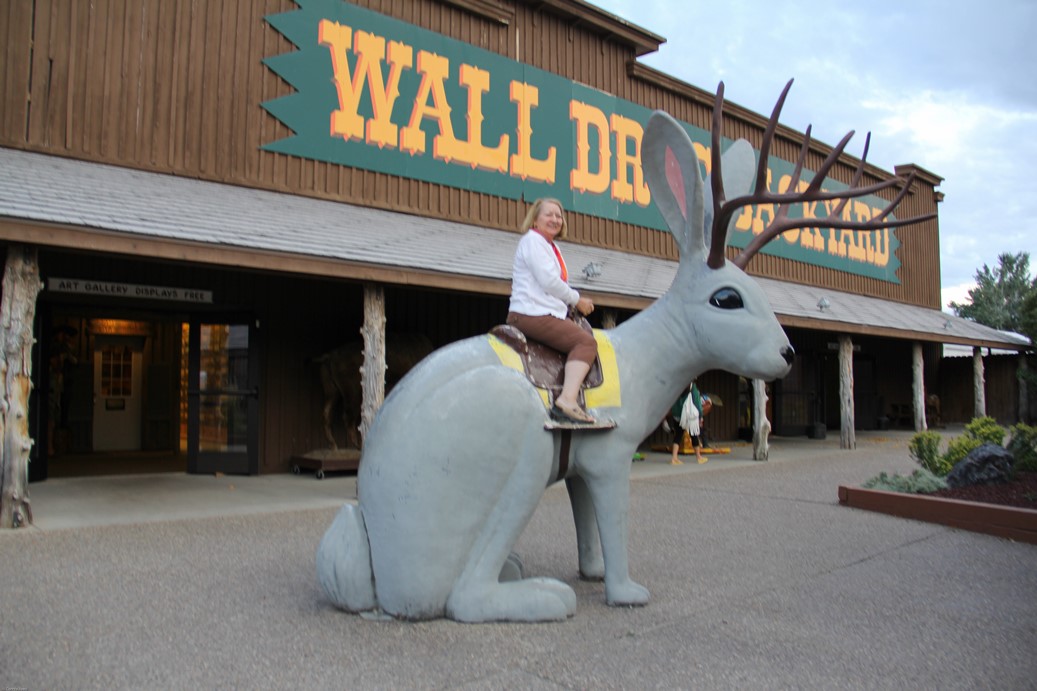
chapelIn the open-air backyard picnic area, you can pose for photo ops on the many photo props, like this giant jackalope.
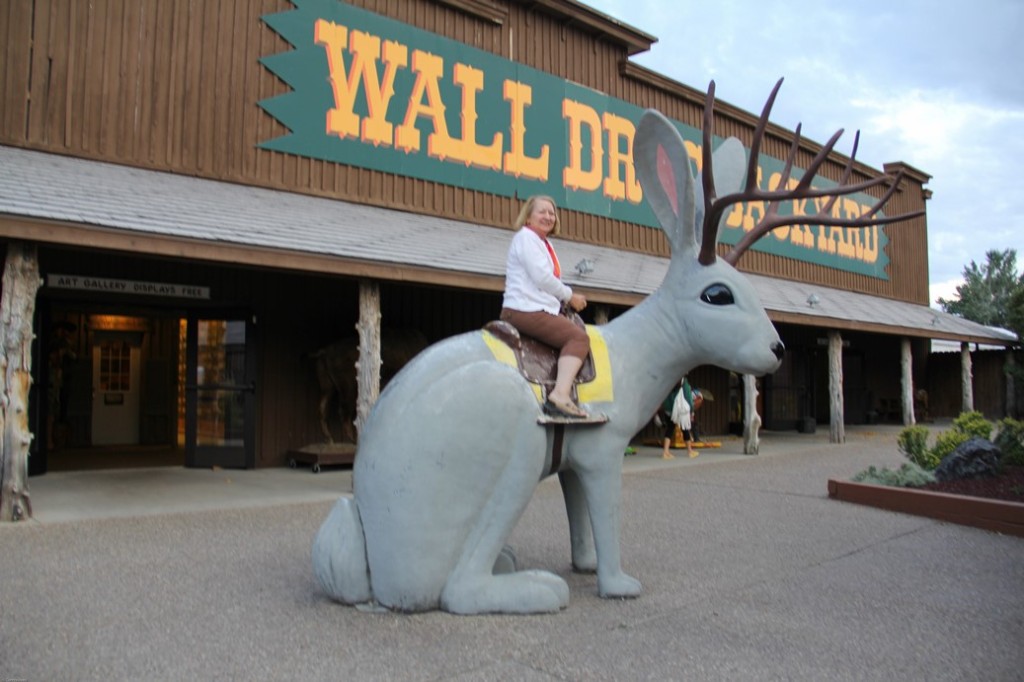
JackalopeThe Back Yard Mall has even more attractions, including an arcade, gem mining, a pizza parlor, and a ferocious dinosaur that comes to life, roaring and smoking, every few minutes.
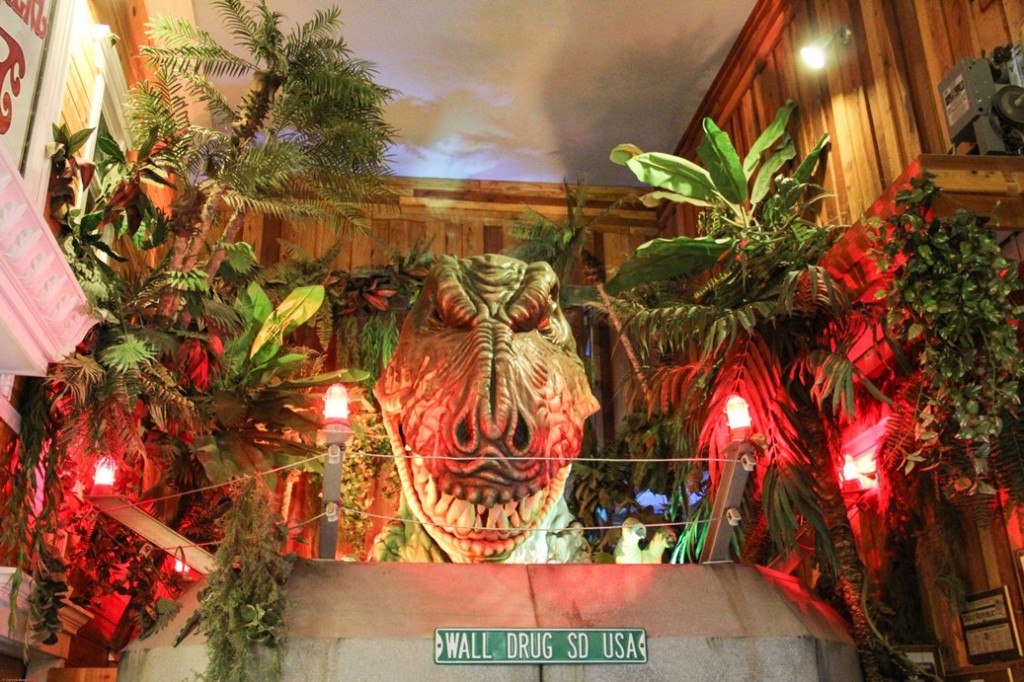
DinosaurToday, over eighty years after the first signs were posted, more than 200 signs in South Dakota, Wyoming and North Dakota invite you to visit Wall Drug. Signs have even been posted in London and Paris subways, attracting an international crowd. Run now by the third generation Hustead family, Wall Drug still stands by their original offer: free ice water. They’ll even fill your jug.

Wall Drug is located at 510 Main Street in Wall, South Dakota, off of I-90 Exit 110. You can’t miss it—just follow the signs. Check the web site for hours and more details.

Disclosure: My visit to the Wall Drug was hosted by the South Dakota Department of Tourism and Wall Drug. However, all opinions in this article are my own.

Thank you for reading Midwest Wanderer.  If you enjoyed this post and would like an e-mail notification when other posts are published, enter your e-mail address below and click Subscribe.  Be sure to click the link when you get the e-mail asking you to confirm. 


Other articles you may enjoy:

Prehistoric History Uncovered at Mammoth Site of Hot Springs, South Dakota

Exploring Native American Heritage in South Dakota

The Journey Museum, Rapid City: Black Hills History and Culture

Chapel in the Hills, Rapid City: Norwegian Serenity